Choose a project your family can finish
For a homemade Christmas gift, decide what you will hand over before choosing supplies. Letters, captioned photographs, or a newspaper can be made together without adding many tools. Keep the work clear: who supplies what, who puts it together, and who checks it before the visit?
These eight projects are editorial suggestions, not tested manufacturing instructions. They focus on stories, pictures, and shared time. None guarantees a completion time or fixed budget. Cost depends on what you already have, the format you choose, and any printing. Start with the simplest version the recipient would like to receive, then add only what makes it more useful.
Eight gifts and what to collect
Each idea has a concrete result and a limit. Choose by the material available: messages for letters, images for an album, and stories for a newspaper. A personal gift can still be short.
- A box of letters. Supplies: paper, envelopes, and a clean box. Each person writes about a particular memory and signs their message. One contributor collects envelopes without rewriting everybody's voice. Limit: agree on what the recipient may share. A private letter does not automatically become a collective text to publish or circulate online.
- A small captioned album. Supplies: approved photographs, paper or a layout file, and notes about dates. Choose a simple sequence, such as a road trip or a year. Share selection and caption checks among contributors. Limit: do not add images just to fill pages, and label an uncertain date as uncertain.
- A book of recipe stories. Supplies: family notes, an optional photograph, and a notebook. Include who passed along the recipe, when it was made, and how different relatives changed it. The gift is the story around the dish, without mailing homemade food. Limit: distinguish family recollection from verified instructions and preserve honest differences in memory.
- Memory cards. Supplies: cards, pens, and a container. Each contributor describes a scene and adds an open question. The recipient can choose a card whenever they like. Limit: leave out embarrassing or sensitive subjects. The gift should not require them to answer every question or perform a family interview on Christmas Day.
- An audio album with written messages. Supplies: a recording device, private access, and transcripts. Collect short messages with each speaker's permission, then check the recipient's listening method. Limit: do not publish voices openly. Provide a written version if it helps them follow along or if opening the file is difficult.
- A map of a family journey. Supplies: paper, your own drawing, and confirmed place names. Connect a few stops with one memory for each. Leave spaces to complete during a visit if useful. Limit: do not expose home addresses or routine movements. Use general landmarks if the map will circulate beyond the recipient.
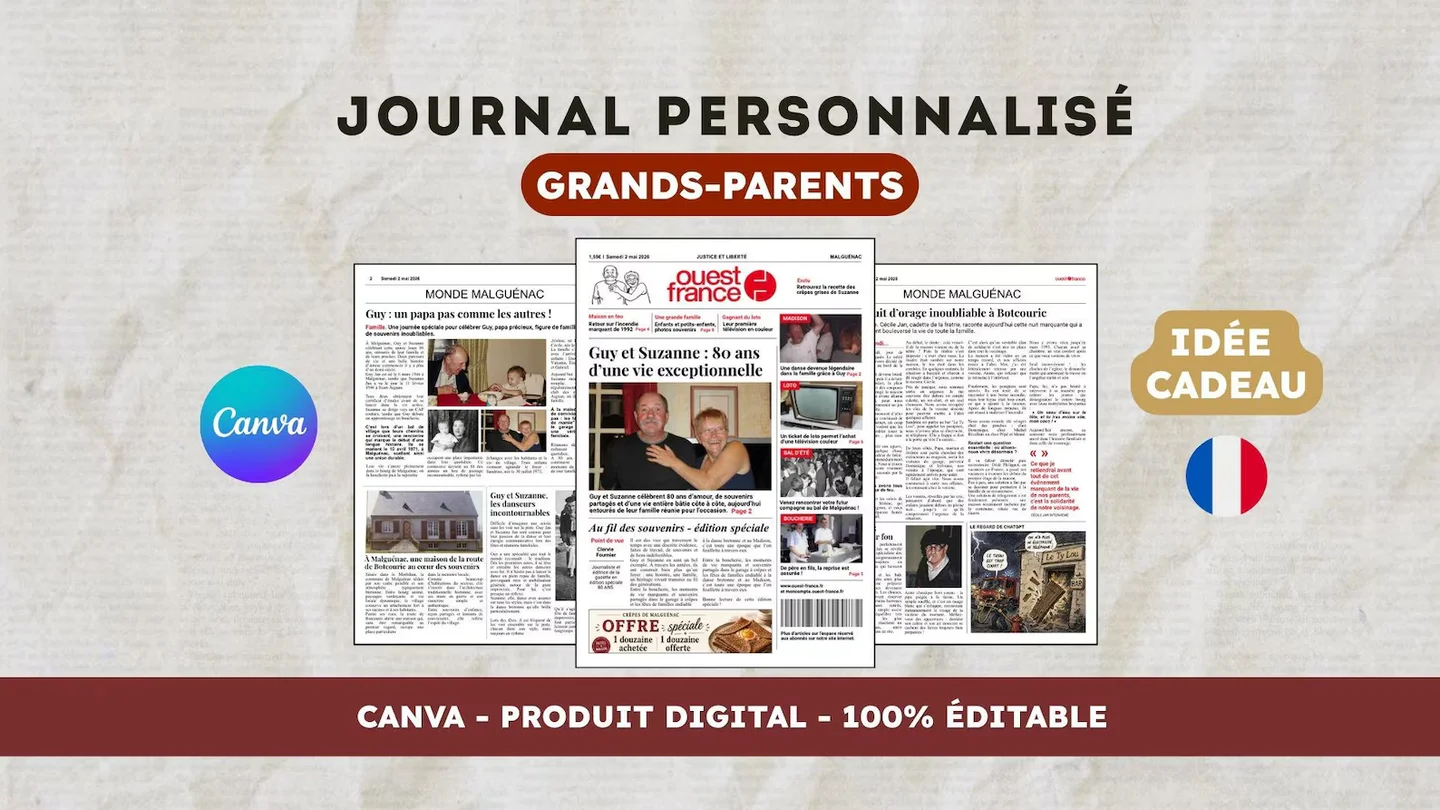
- A family Christmas newspaper. Supplies: stories, messages, photos, and a layout tool. Give each relative one section, then have one person assemble and review the pages. Limit: a birthday template still needs adapting. A digital file does not include personalization done for you or a printed newspaper shipped to the recipient.
- A calendar of shared visits. Supplies: a paper calendar or file, real availability, and practical ideas. Add a few moments you choose together, such as a walk or a meal you arrange. Limit: confirm the dates. Do not fill twelve months with promises nobody can keep, especially when family members live in different states.
Make a supply list before ordering
The grid separates the material contributors supply from the support you may need to buy. First check what your family already owns: an unused notebook, envelopes, or available photographs may be enough. For a digital project, check the tool and the recipient's way of reading before paying for a file.
| Project | Content | Support | Check |
|---|---|---|---|
| Letters | A signed memory | Paper and envelopes | Private sharing |
| Album | Captioned photos | Paper or layout | Names and dates |
| Recipe stories | Recipe and context | Notebook | Family sources |
| Cards | Scene and question | Cards and box | Agreed topics |
| Audio | Voices and transcripts | Private access | Usable playback |
| Family map | Places and stories | Your own drawing | Private addresses |
| Newspaper | Stories and photos | Tool or template | Language and occasion |
| Calendar | Confirmed dates | Paper or file | Named organizer |
Write a handoff card for the project
Give the project a card with four fields: the contribution needed, the person assembling it, the final check, and the handoff method. For letters, a contribution may be one memory; for an album, one photograph and caption. Set your internal deadline after checking family availability and any provider's requirements.
Fictional editorial example: a family is making a recipe-story notebook for Christmas. Avery collects stories, a cousin checks names, and a brother organizes the paper version. Each person sends one recipe and its context, not ten vague ideas. If a contribution is missing, the notebook keeps the finished accounts. The handoff does not depend on a memory nobody can locate.
When a newspaper template makes sense
A template helps when you have different kinds of material to organize: portraits, stories, and messages. It is less suitable when you have only one letter or two photographs. Compare the preview with your content before buying. A twelve-page layout is not a reason to invent twelve pages of memories.
The referenced 22routes products are digital layouts editable in Canva. Choose the file's actual French or English language, then change the age, date, and birthday wording that do not fit Christmas. Inspect all pages. If you would have to rebuild the whole structure, letters or an album may suit better. Printing and shipping remain separate arrangements.
Keep contributors' voices and memories intact
Correct a misspelled name, but do not turn every message into the same speech. Ask for confirmation when a detail is uncertain. Identify sample text instead of presenting it as your family's testimony. People mentioned in the gift should be able to decline a photograph or story.
Hand over something ready to use
For paper, check the preview and the provider's actual terms before ordering. For digital gifts, provide a finished file or explain exactly what remains to be done. The recipient should not discover a missing account or access permission while opening it. If something is delayed, give the finished parts and explain the rest without promising timing you cannot control.
Frequently asked questions
01What can I make for my family for Christmas?
Choose a limited result: a letter, a captioned photograph, a few memory cards, or a small notebook. Collect the material, assign one job to each contributor, and check what you will hand over. Reduce the project rather than adding pages without content.
02Does a homemade gift need to be printed?
No. A recording, visit, or finished file may fit if the recipient wants that format. Check access and use. A digital template still needs personalization; if you choose paper, obtain production terms separately.
Have another newspaper in mind?
Suggest the title. We’ll email you if a template becomes available.