Give every page a job
To plan a twelve-page family newspaper, give each page one job: introduce, tell a story, show a scene, bring in another voice, or say thank you. Assign one main memory to each slot before opening the layout. This is an editorial planning map, not a description of the page labels inside a purchased template. Check the actual preview before assigning your material.
The cover should invite the reader in without summarizing every anecdote. Choose a headline, a photograph, and a short reason to turn the page. Save the full story for an inside page. An event may appear again in a caption, but that caption should supply a new detail rather than repeat the opening of the story.
A twelve-page map you can adapt
This fictional editorial allocation demonstrates the method. Page numbers refer to your working plan, not instructions for print assembly. Before using it, check whether the chosen layout can hold these pieces without changing its dimensions.
- Page 1: cover photograph and headline.
- Page 2: welcome note and reader orientation.
- Page 3: a portrait built around one memory.
- Page 4: childhood through a particular place.
- Page 5: everyday routines and habits.
- Page 6: a memorable trip or outing.
- Page 7: a photo album with distinct captions.
- Page 8: another album or family scene.
- Page 9: signed contributions from relatives.
- Page 10: objects, sayings, or small traditions.
- Page 11: personal messages and thanks.
- Page 12: a closing image and final note.
Choose a photo-led or story-led version
If you mostly have identified photographs, make pages 4 through 8 small themed sequences: one place, one period, or one activity. Give each sequence a short introduction and meaningful captions. Avoid five interchangeable albums. If a photograph has no reliable date, describe what you do know without supplying an invented year.
If relatives have supplied more stories than pictures, use pages 4 through 6 for three different narratives and page 8 for a longer contribution. Keep page 7 as a visual pause. A longer article needs one central idea; short quotations and personal messages do not need the same amount of space. Read the two neighboring pages together to check the rhythm.
Replace missing material without creating repetition
In this fictional example, the travel page has no usable photographs. It could become a story about a first outing, illustrated with an object photographed today and clearly described that way. If the story is missing too, choose a different verified memory. Do not spread one anecdote across three pages simply to fill the map.
Give every memory a short working label, such as “night train,” “garden,” or “recipe.” When a label appears twice, ask what each appearance adds. Move similar passages onto one page. Remove transitions that no longer belong, then read the headings in order: they should promise genuinely different material rather than several versions of the same story.
Turn the map into a preparation list
For each page, track five fields: main memory, available text, available image, person who can confirm the details, and review status. One complete row is more useful than a folder of files with no destination. Begin layout once the essential pieces are confirmed; keep optional contributions in a separate folder so they cannot quietly expand the project.
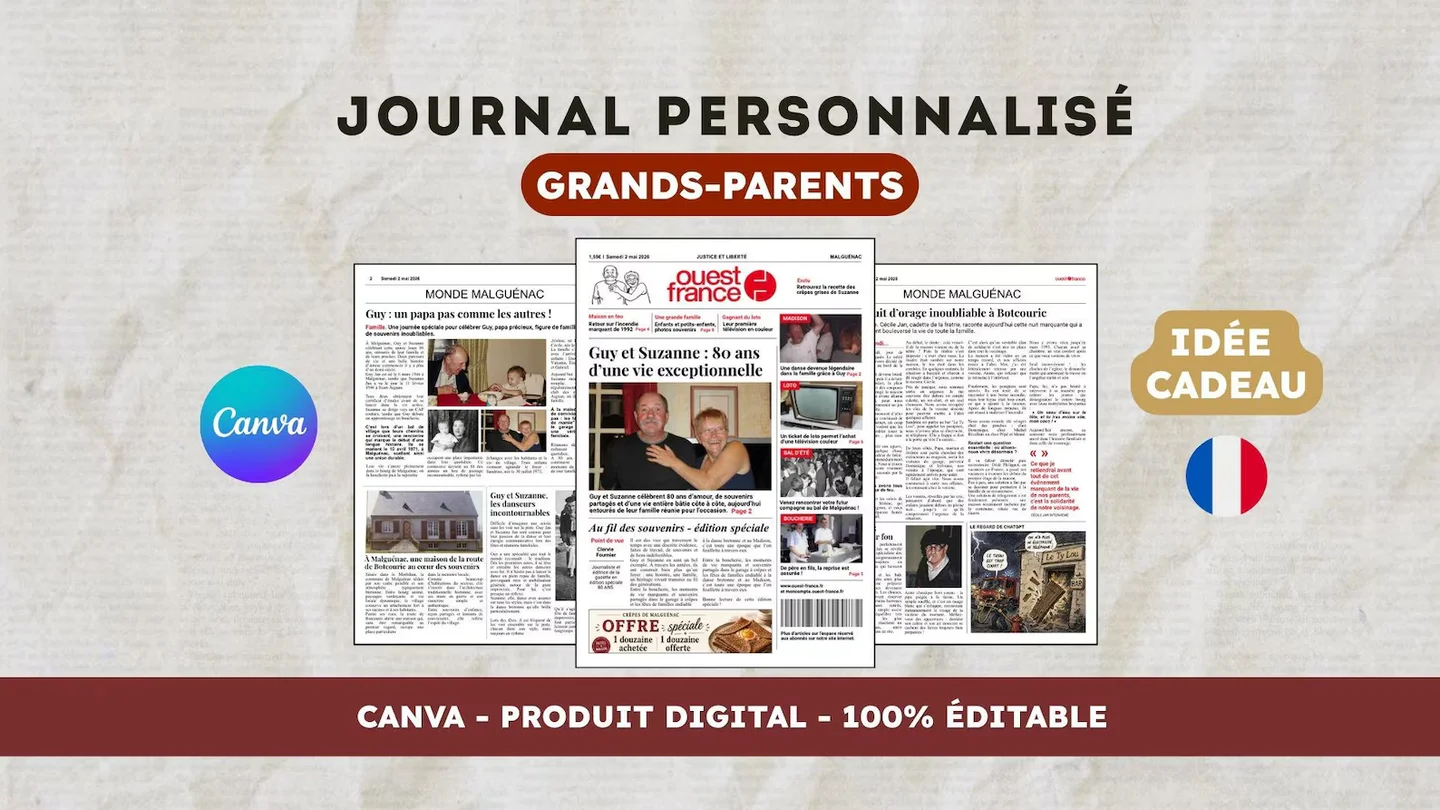
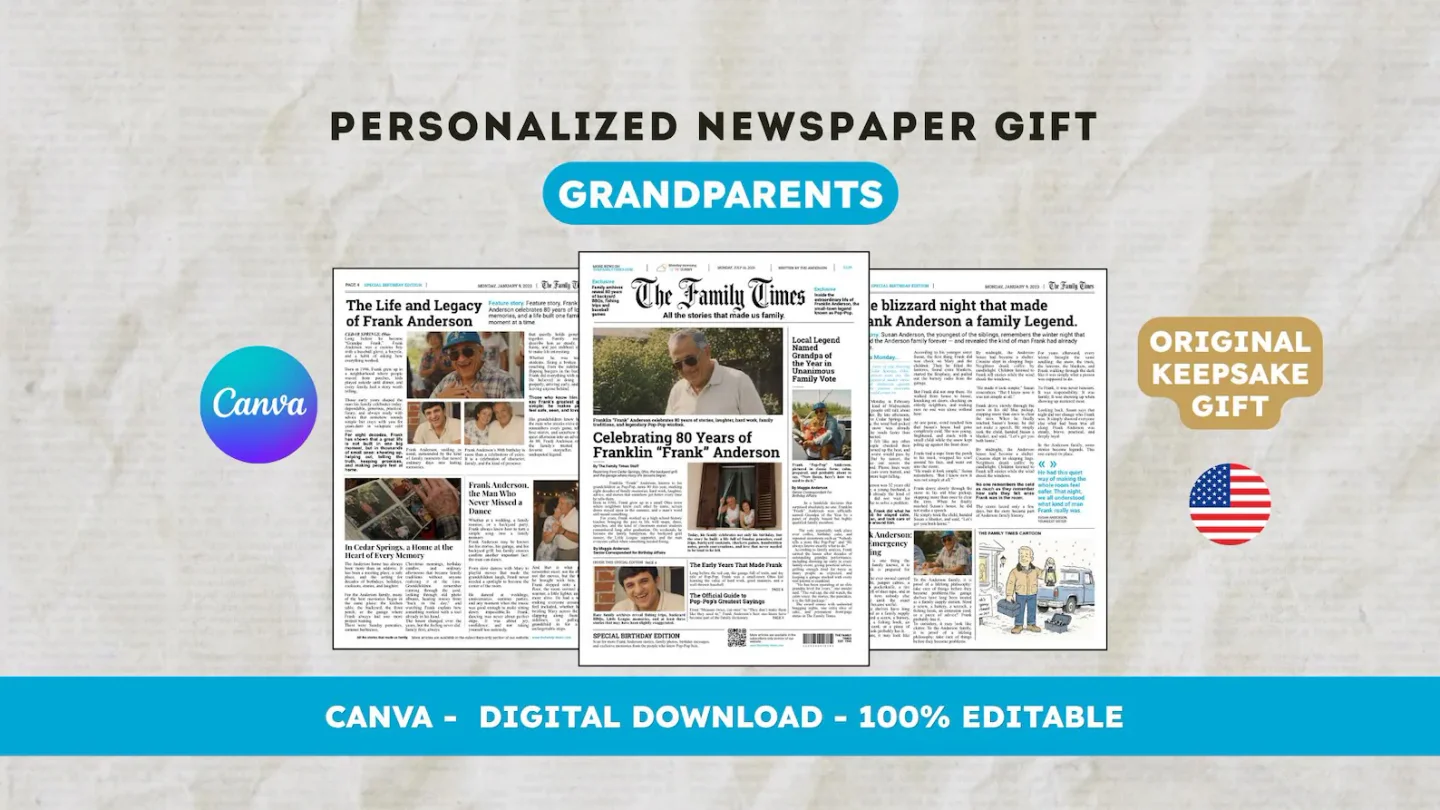
The public 22routes guides on preparing photos and stories and choosing birthday sections extend this work; their links appear in the resources. For an English project, inspect the English 80th birthday newspaper preview. It is a twelve-page digital Canva template to personalize. Printing is arranged separately, and another occasion should only be considered if its actual preview fits.
Frequently asked questions
01Can this plan work with very few photos?
Yes. Choose the story-led version, retain a visual pause, and use pictures whose context you can explain. Objects photographed today may illustrate a memory when the caption says so; they should not be presented as historical photographs.
02Must I copy the template’s section labels exactly?
The map organizes your material. Compare it with the pages actually shown in the preview and check which elements are editable. Fit your writing to the layout without assuming that every section label or format can be changed interchangeably.
Have another newspaper in mind?
Suggest the title. We’ll email you if a template becomes available.