Start with the person who knows this version
To turn a family recipe into a newspaper story, first identify who is sharing it and what that person can confirm. Give the page two separate blocks: the recipe as supplied and a memory of a meal. These are different kinds of evidence, even when the same relative provides both. An ingredient list cannot establish a regional origin or several generations of family history.
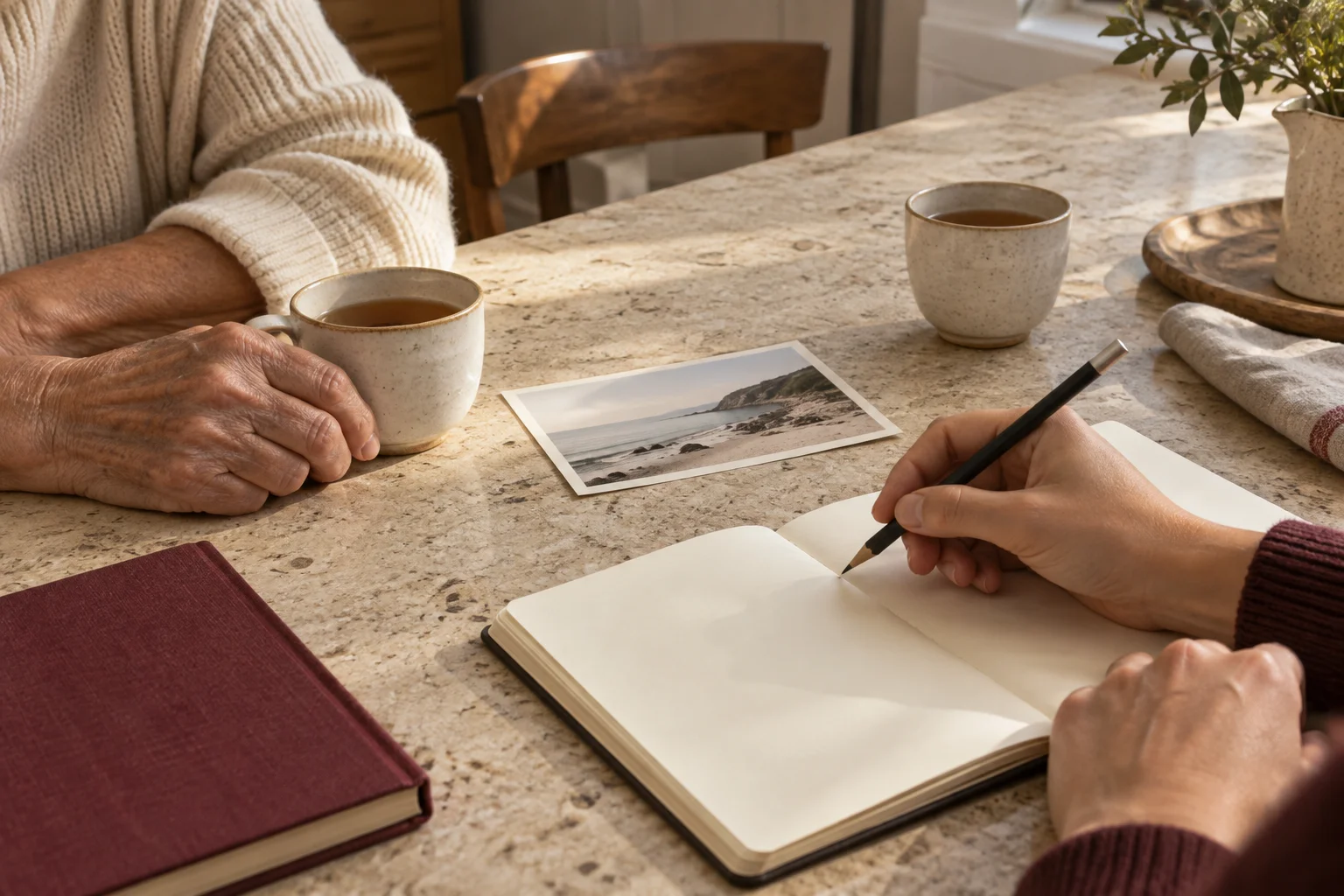
Ask where the contributor learned this version, when they make it, and what they change today. Save those answers before choosing a headline. StoryCorps offers prompts about childhood and family memories; these can help start a conversation, but they do not verify your dish’s history. A modest title such as “Leah’s apple tart” is more useful than an unsupported claim that it is an ancient family specialty.
Use a recipe block and a source block
Copy this working sheet: dish name; person supplying this version; document consulted; supplied ingredients and quantities; supplied steps; unresolved points; reviewer. For the source history, add: learned from whom; direct memory or secondhand account; date known or unknown; current variation. Keep these fields in your notes even if the finished newspaper shows only the credit and a short introduction.
Do not fill in a missing quantity to make the recipe look complete. Ask the contributor, or present it as a recipe memory rather than ready-to-follow instructions. Preparing the article does not amount to testing the dish. Leave out added nutrition figures, storage advice, and allergy assurances. This worksheet helps you explain where the words came from; it does not certify the recipe or make unsupported cooking advice reliable.
Fictional example: two connected blocks
Entirely fictional example, offered as a structure rather than a story to copy: “Apple tart, version shared by Leah with her niece. Notes taken during their conversation. Leah says she learned it with her mother; its earlier origin is unknown. Ingredients and method: copy from her recipe sheet after checking with her.” This entry shows both the source and the limits of the source.
The memory block might read: “According to Leah, leftover dough became little shapes for the children. Her niece mostly remembers the bowl where she put them. Leah sometimes makes a smaller tart now.” No quantities have been invented. Each voice keeps its own role: what Leah explains and what her niece remembers. Replace every fictional element with material you actually collected, and keep the recipe instructions separate from the scene beside them.
Keep variations without inventing an origin
If two relatives supply different recipes, choose one for the main recipe block and name that version. A short sidebar can hold the other: “Variation supplied by…” Do not automatically combine their ingredients under a third person’s name. That would produce a version nobody supplied and give it a misleading credit. Keep the working notes for both, even if space permits only one in this edition.
Differences in memory can remain visible too: “Paul remembers Sunday lunches; Leah mainly recalls school breaks.” Ask whether they mean the same occasion. If you cannot tell, do not merge them into one scene. Have each quoted contributor review the excerpt, especially the wording about who taught whom. An unknown origin can stay unknown. The page can document a present practice without claiming to explain how it began.
Build a page the contributor recognizes
Place the dish name, selected version, and contributor credit before the details. Add the recipe block, then the memory. A photograph may show the dish or a related object, but its caption should describe what it actually shows. A recent picture should not be presented as a photograph of the earlier meal. Ask the contributor to review the whole page: name, instructions, memory, and credit.
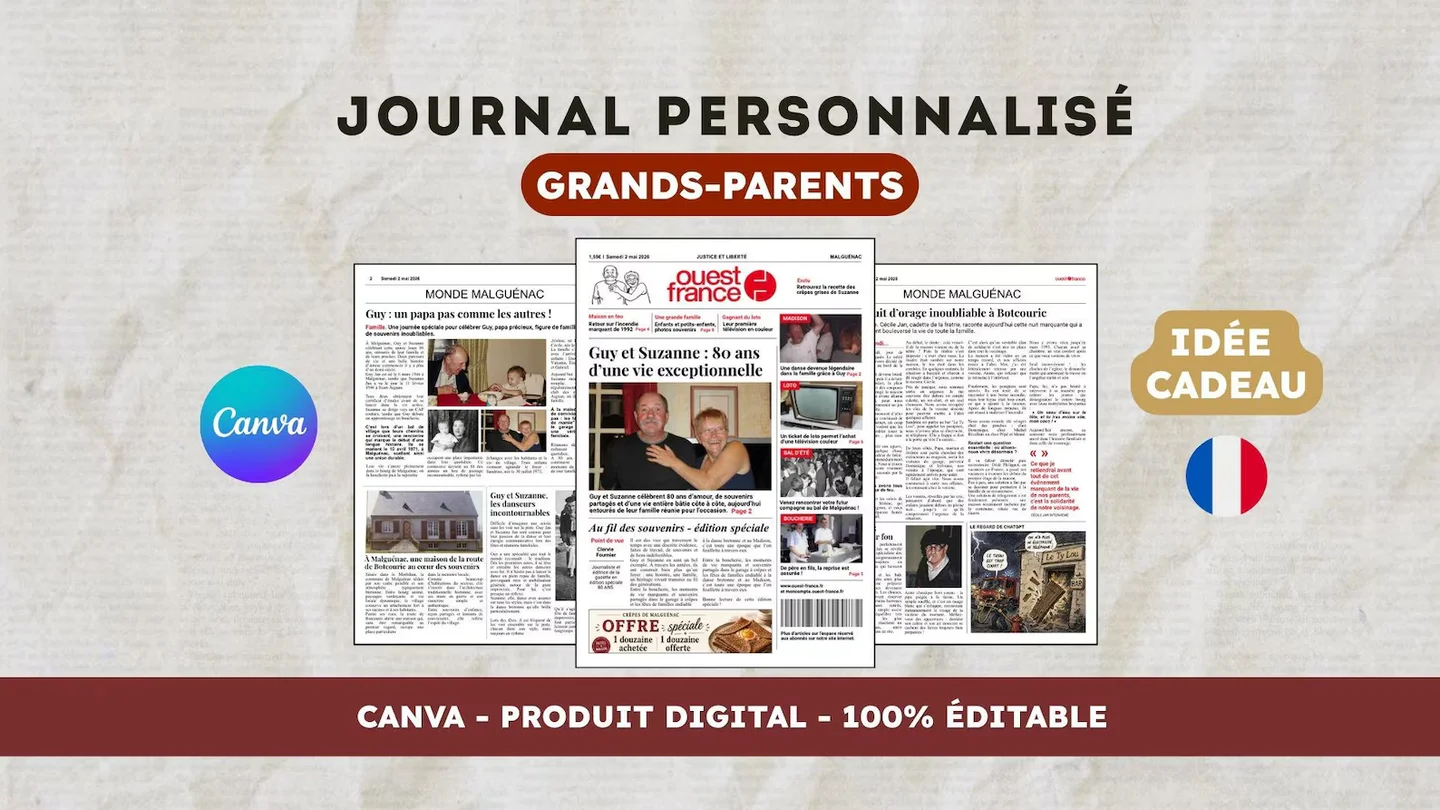
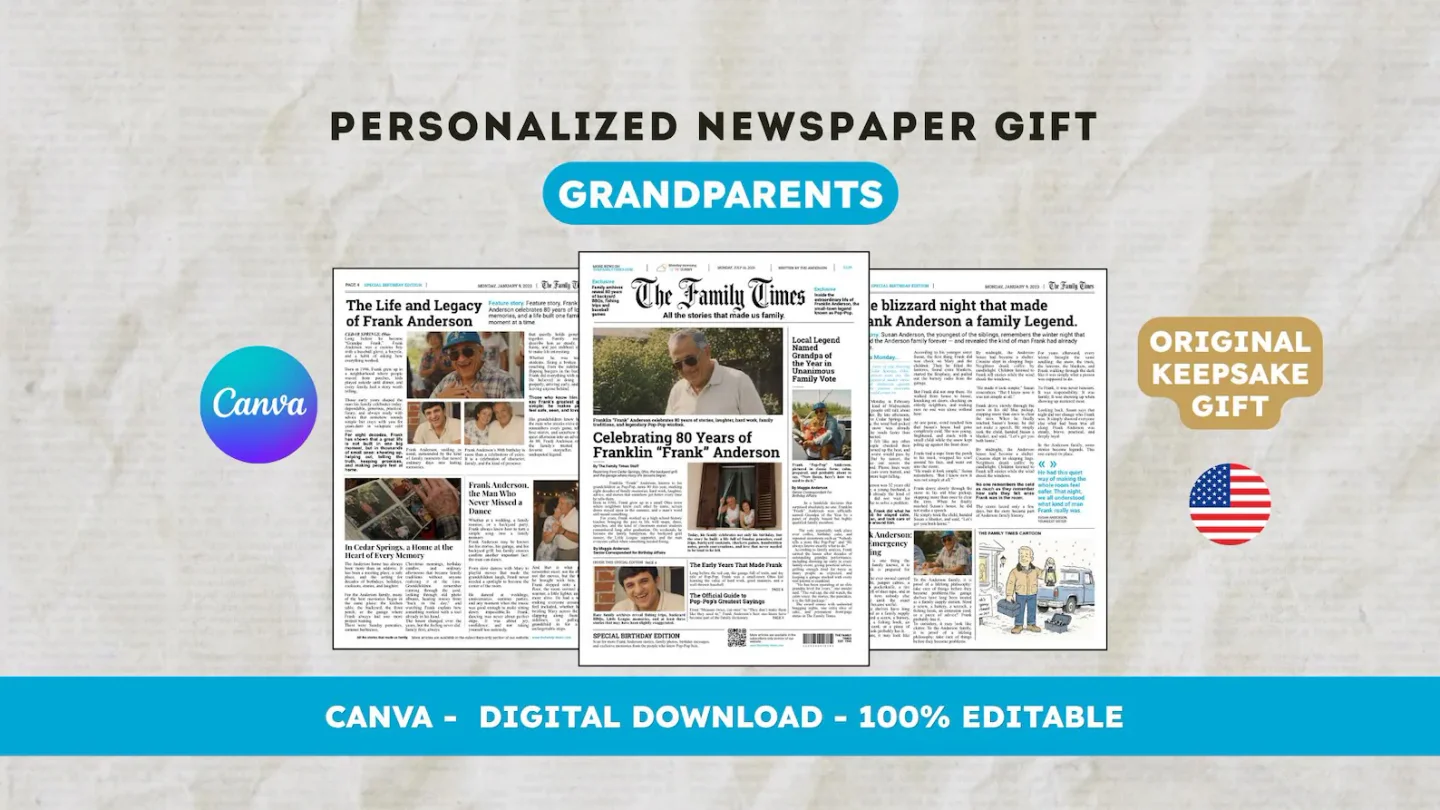
The 22routes guide to gathering photos and stories, listed below, can help you collect the material. For an English-language birthday project, the 80th birthday newspaper is a 12-page digital template personalized in Canva. The grandparents birthday template is in French. Choose according to the language of the actual file, then adapt the text to your occasion. Printing is arranged separately from the digital template; this story worksheet does not determine a printer’s specifications.
Frequently asked questions
01What if the recipe has never been written down?
Write down the contributor’s version and ask them to check quantities and steps. If details remain incomplete, publish a memory about the dish, rather than a tested recipe readers can follow.
02Can you call it Grandma’s recipe without knowing its origin?
State the connection you know: made by her, shared by her, or found in her notebook. None of those statements proves that she invented it. An earlier origin can remain unknown.
Have another newspaper in mind?
Suggest the title. We’ll email you if a template becomes available.