
Choose one scene instead of a house tour
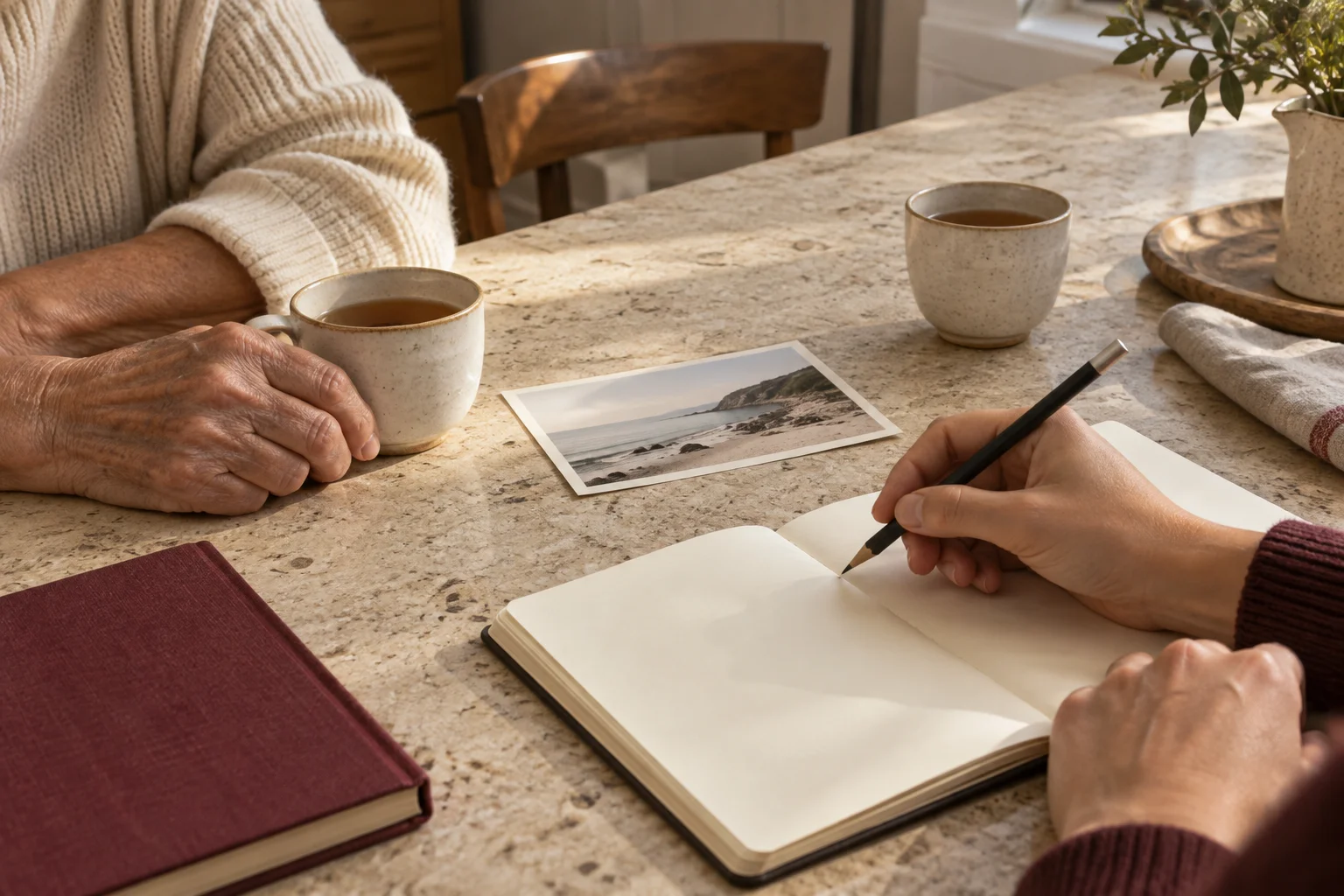
To write a childhood-home story, choose one small place and something that happened there: waiting at a window, coming in through the yard, or doing homework at a table. The newspaper does not need a tour of every room or a full childhood biography. One scene gives the reader a way in and limits the facts you need to check. Choose a memory the contributor wants to share, rather than the one that sounds most dramatic to you.
Start with an open invitation to describe that spot. StoryCorps includes childhood prompts; that approach can help you begin with a chosen memory instead of a date quiz. Listen, then follow up on a detail the speaker mentioned. If they recall no color or smell, do not supply one to manufacture atmosphere.
The worksheet: place, action, detail, boundaries
Prepare six lines: place named without an address; person telling the story; repeated action or single scene; remembered detail; confirmed or uncertain period; information to keep private. Add any supporting material, such as a photograph or note, and record who identifies it. This separates what a document shows from the memory someone associates with it. Neither needs to be forced into proving the other.
Use one final line for the ending: what remains of this place in the speaker’s memory? It can be an object, a routine, or another person; it does not need a life lesson. Leave unknown fields blank in your working notes. This sheet is not a test that every contributor must complete. If only the walk to the door comes back clearly, that may be the story worth writing.
Fictional example: the bench by the door
Entirely fictional worksheet: place, entryway; speaker, Nora; action, taking off shoes on a bench; detail, a bag placed underneath; period, while she attended school, year unknown; boundary, no address or names of current residents. The bag comes from Nora’s memory, not a photograph that independently confirms it. That distinction stays in the drafting notes even when the short story does not explain every source.
The scene could read: “Nora remembers the entryway bench where she took off her shoes after school. She left her bag underneath before going into the kitchen. She cannot place the year, but that small pause is what she associates with her childhood home.” This fictional passage makes no claim about the other rooms. It demonstrates how an ordinary action can stand alone without a biography or added scenery.
Check the period without false precision
Ask what genuinely places the scene: the school attended, someone who was present, a season, or an already confirmed event. These landmarks may be enough. “During elementary school” works if Nora confirms it; an exact year does not if nobody knows it. Another relative may help, but a second memory does not automatically turn the scene into documentary proof. Keep that person’s name in the working notes.
Check whether a photograph shows the place and period being described. If it is recent, say so in the caption. If identification remains uncertain, choose another image or use the text alone. Do not use a house picture found online to imply that it depicts the family home. Before layout, review each descriptive detail: did it come from the speaker, an identifiable document, or only your imagination?
Share the memory and leave out the address
A room name or broad neighborhood can locate the story without revealing a full address. Leave out access details, information about current residents, and anything the contributor does not want shared. Show them the text and caption together: cautious wording beside a revealing photograph may still identify the property. These are editorial decisions for this project, not a claim that one approval resolves every possible permission issue.
The photo-and-story preparation guide is listed in the resources below. For an English-language birthday project, the 80th birthday newspaper provides a 12-page digital template to personalize in Canva. The grandparents birthday template is in French. Choose the actual file language and review the scene before laying it out. Printing is separate from the template. The design gives your story a place; it does not supply or verify the family memory.
Frequently asked questions
01Can you tell the story without a photograph?
Yes. A place, an action, and a genuinely remembered detail can be enough. A specific headline and contributor credit help the reader. Avoid a generic image that could be mistaken for the real house.
02What if the memory has no known date?
Use a confirmed period or state that the year is unknown. Do not infer a year from furniture or clothing styles. The scene can still be useful without an exact date.
Have another newspaper in mind?
Suggest the title. We’ll email you if a template becomes available.