
Choose three moments instead of every job
For a career story in a retirement newspaper, choose three work moments people can describe: learning a task, handling a difficulty, and passing on a practice. This is an editorial choice, not a demand for three major achievements. Ordinary work can make a specific story. Leave out job titles you cannot explain and successes nobody can confirm. The page should help family readers understand the person’s work.
StoryCorps offers prompts about work and colleagues. These can help you ask what someone actually did, with whom, and how. Keep this item focused on those scenes; it is not a full biography or a timeline of every position. If only two moments are documented, use two. An invented third episode would undermine the other two rather than complete the page.
A three-moment worksheet to fill in
For each moment, record: action; context understandable outside the workplace; person who remembers it; checked or unknown period; genuinely confirmed outcome; detail suitable for sharing; quotation to review. Keep a simple distinction between what you know, what someone reports, and what is missing. A document may confirm a position without confirming the anecdote attached to it. Save both sources in your working notes.
Check names and work terminology with the contributor. Explain an abbreviation in ordinary language for relatives outside the field, then use the clearer term. You do not need an organization chart. If the scene depends on internal figures, an identifiable client, or a sensitive file, choose another moment. The gift should be understandable without exposing information the contributor is not comfortable sharing with its intended readers.
Fictional example: learn, explain, pass it on
Entirely fictional example: Sam’s worksheet, with no career dates supplied here. Moment one: learning to prepare equipment with a coworker; source, Sam’s account; numerical result, none. Moment two: explaining a procedure to a new hire; source, that person’s account; name for publication, to be checked. Moment three: leaving a reference list for the team; source, list shown by Sam, with its private content not reproduced.
The item might group these entries under “The skills he passed on.” A fictional quotation demonstrates the form: “He took the time to show me again,” the new hire recalls. This is not a customer testimonial or a verified achievement. Replace the example with collected scenes and an approved quotation. You do not need to invent a promotion or performance figure to connect the moments.
Review quotes and leave the future open
Ask the coworker to review the selected sentence and its credit. Do not turn “he helped me” into “he trained the whole team.” A paraphrase remains a paraphrase and should not appear in quotation marks. If a quote contains criticism, an uncomfortable nickname, or private information, find a more appropriate excerpt with its author instead of silently rewriting what they said. Keep the approved wording in your notes.
The ending can offer a wish without predicting retirement plans. “We hope you have time for what you enjoy” is a proposed message, not evidence of the person’s intentions. If they have shared a project they want included, attribute it. Do not announce travel, volunteering, or a move to create a cheerful conclusion. A thank-you tied to the action already described can be a sufficient ending.
Fit the story into an existing template
A headline, three short blocks, and a quote can make this newspaper item. Adjust their length after reviewing the facts; do not replace missing scenes with compliments. A workplace photograph also needs a check for names, documents, locations, and other people it reveals. Its caption should situate the image without assigning an unconfirmed role or year. The image and the story should describe the same known context.
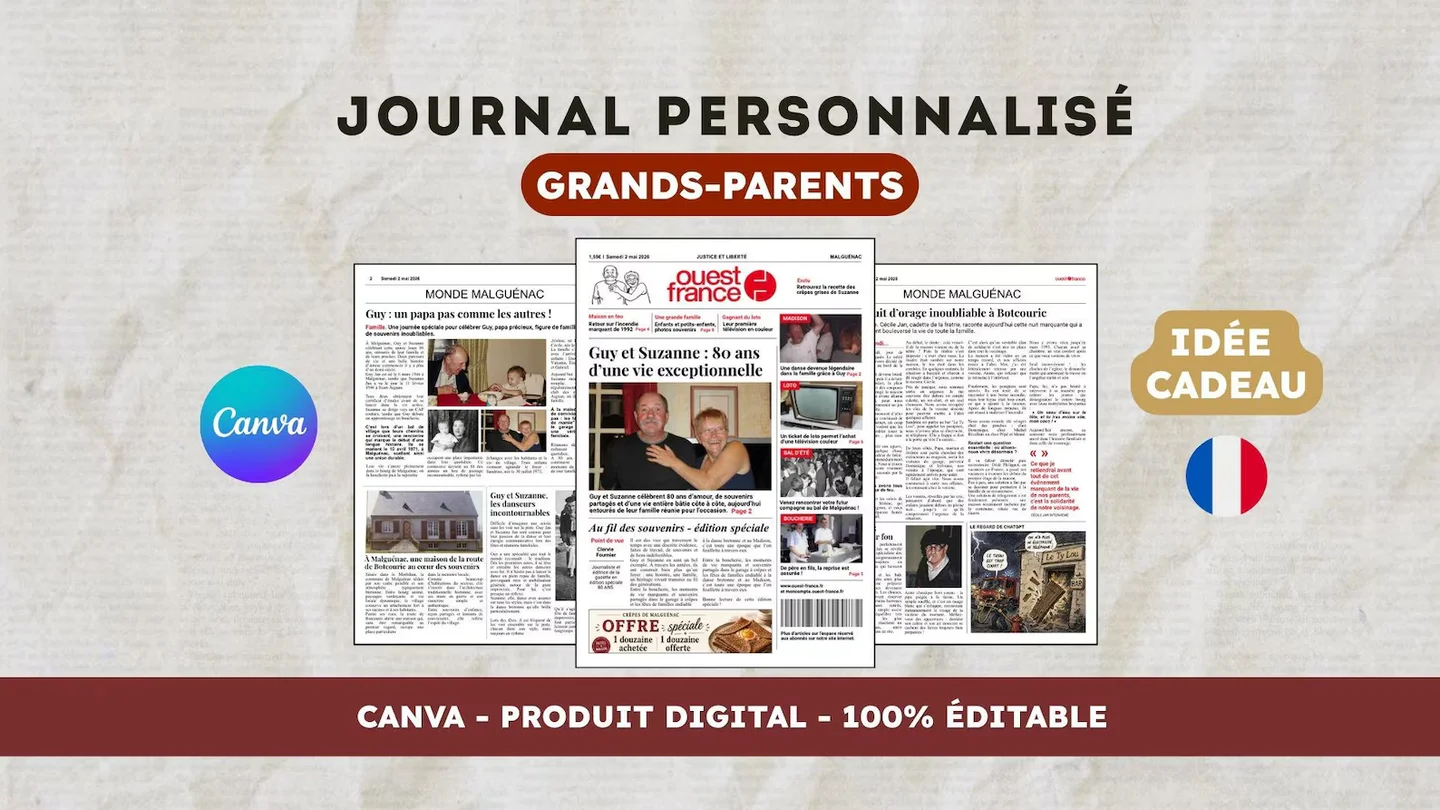
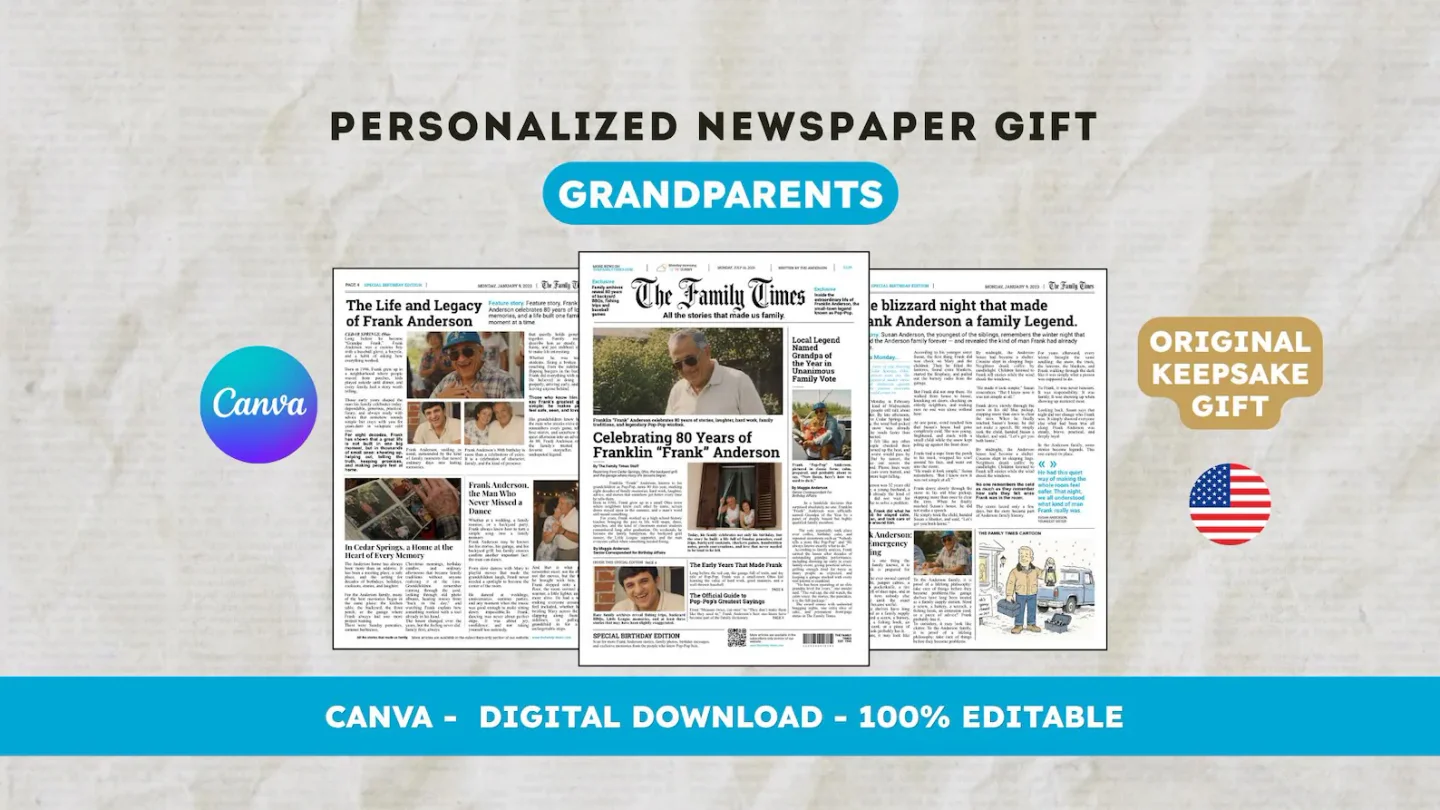
22routes is not offering a retirement-specific template here. The English 80th birthday template and the French grandparents birthday template are 12-page digital files personalized in Canva. If you choose one, inspect its previews and adapt birthday wording to your project. Choose the actual template language, rather than assuming the storefront language determines it. Printing remains separate. The resources below identify these real offers and the guide for gathering photos and stories.
Frequently asked questions
01What makes a thoughtful retirement message?
Thank the person for something you actually observed, then offer an open wish. Fictional example: “Thank you for taking time to explain. I hope you enjoy the projects that interest you.” Do not present an assumed retirement plan as settled.
02Do you need dates for every position?
Not for this item focused on three moments. Include only useful, confirmed landmarks. A complete career timeline is a separate task; do not infer missing dates from coworkers’ memories.
Have another newspaper in mind?
Suggest the title. We’ll email you if a template becomes available.