Decide what you want to maintain
A one-time newspaper gift gathers memories around an event; ongoing updates maintain contact over time. Choose the purpose before the method. An attractive first edition does not guarantee that someone will supply the next one. Conversely, a stream of recent news does not necessarily replace a keepsake planned around a birthday.
Ask the recipient how they prefer receiving updates: paper to keep, a file on their device, or a shared reading session. Do not infer that preference from their age. Desired frequency and ease of reading matter as much as the first edition’s appearance. A family project can change its format without needing to become a subscription.
Plan the next contributions
For a one-time gift, you can collect existing stories, review one version, and close the project. For recurring issues, you also need someone to remind relatives, select material, and prepare the next edition. Name a backup or explicitly accept that an issue may be skipped. A schedule with no owner is only a wish.
Before choosing a cadence, ask each contributor what they can realistically provide: a captioned photo, a short paragraph, or an occasional update. Do not require the same contribution from everyone. A sustainable arrangement allows quiet periods rather than repeating news solely to fulfill a promise. Distinguish the person who supplies an item from the person responsible for completing an issue.
A keepsake-or-routine worksheet
In this fictional editorial example, a family prepares a birthday gift and then considers continuing updates. They complete two independent columns. Copy the worksheet without assuming one solution fits both purposes. The final row is the test: if it remains empty, do not promise the next issue yet.
- Purpose: celebrate an event / maintain contact.
- Material: collected memories / news collected after each period.
- Owner: person closing the gift / person following future issues.
- Delivery: handover chosen for the event / channel confirmed with the recipient.
- Archive: dated final file / dated files organized by issue.
- Next step: no continuing promise / next owner and a rule for missing material.
Evaluate a service without assuming its terms
If you are considering a family newsletter service, read its terms before comparing offers. Record the proposed frequency, included recipients, tasks you must perform yourself, renewal terms, and cancellation process. Ask how to retrieve your content if you stop. This guide does not rank services or supply current subscription prices.
For a family-managed project, list recurring tasks and possible expenses instead: printing, delivery, storage, and tools you actually need. A family-chosen cadence can remain flexible. If you work in Canva, check the options available in your account; some export controls described in its official help depend on access. Do not treat an editor account as a managed newsletter service.
Let the two projects coexist
You can give a memory newspaper and then share updates another way. Preserve the gift as a finished edition instead of silently replacing its file with later news. Date each new issue clearly, and ask the people involved before sharing their pictures or words. Keep the archive somewhere a family member can find it rather than relying on one old message.
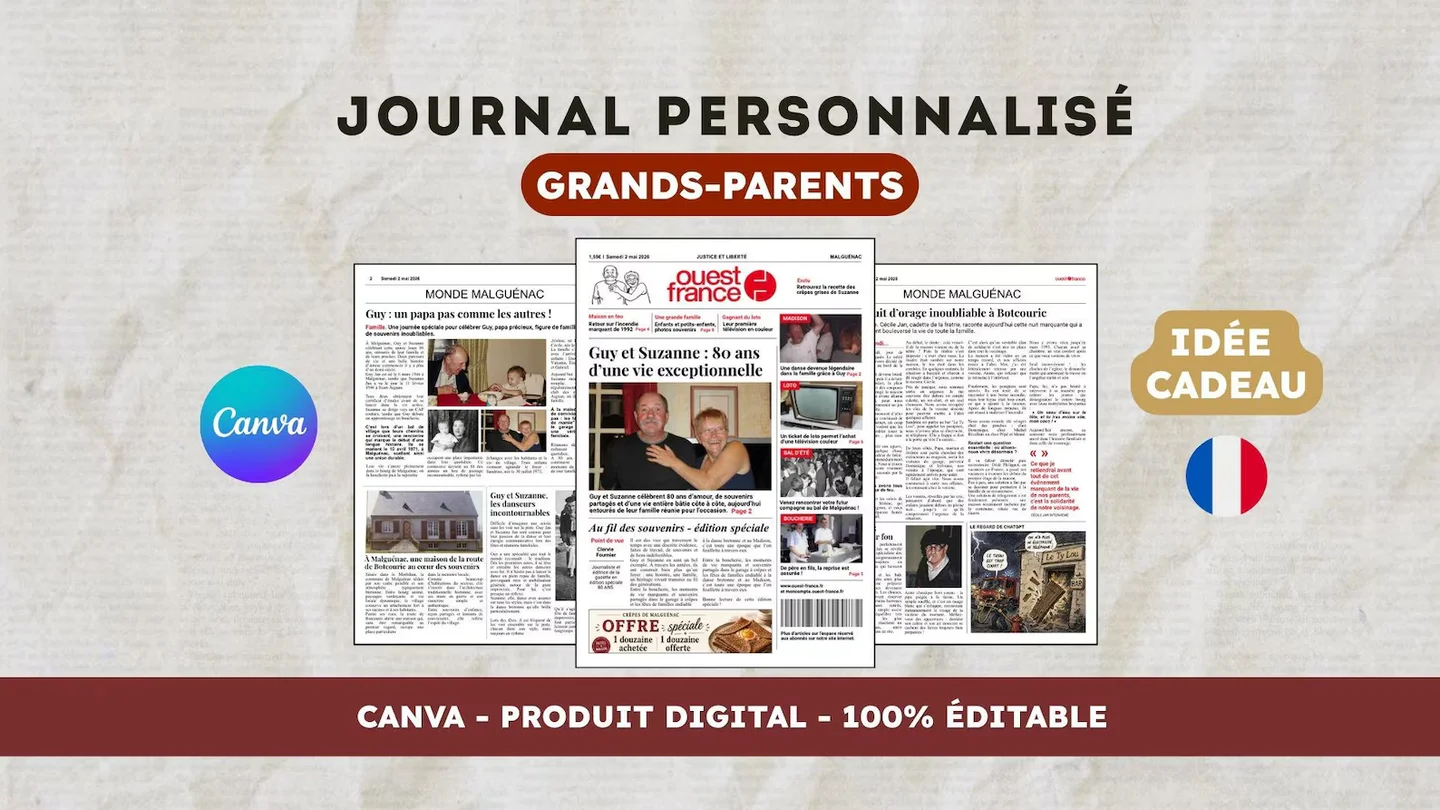
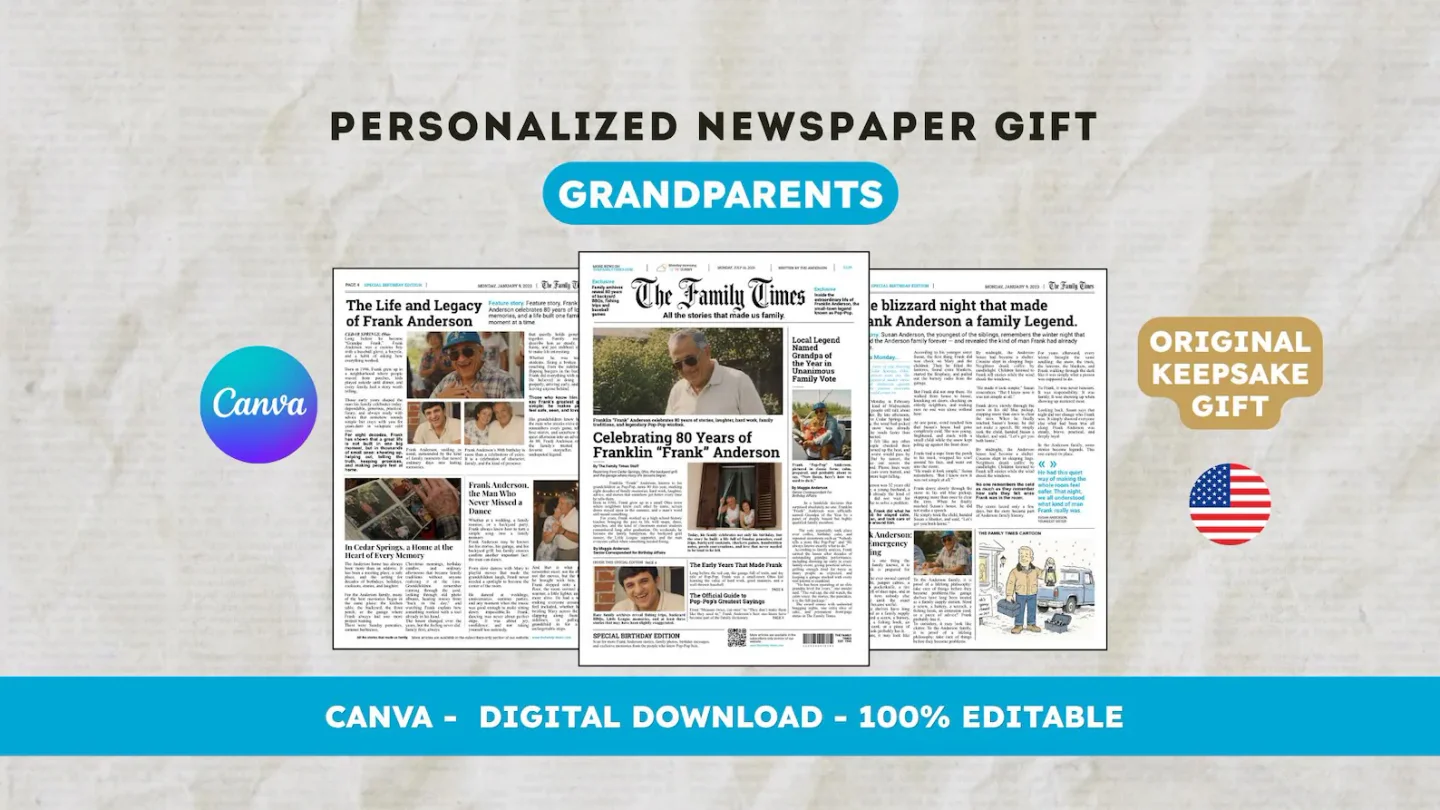
22routes templates are twelve-page digital Canva files, not an ongoing family-news service. The resources include the English 80th birthday newspaper and the public preparation and birthday-story guides. Inspect the preview for your specific gift; another occasion depends on its suitability. Printing is separate, and buying a template does not provide a subscription or recurring delivery.
Frequently asked questions
01How do I choose a family newsletter arrangement?
Choose around the recipient’s reading preference, available contributions, and any service’s actual terms. This guide offers no verified ranking. Complete the keepsake-or-routine worksheet to separate a one-time gift from the need for continuing contact.
02What if nobody contributes to the next issue?
Use the rule agreed in advance: postpone, produce a smaller issue, or pause. Tell recipients without inventing updates. If a paid service is involved, check its terms separately; pausing your writing is not the same as canceling a subscription.
Have another newspaper in mind?
Suggest the title. We’ll email you if a template becomes available.