Choose one shared memory, not a whole life
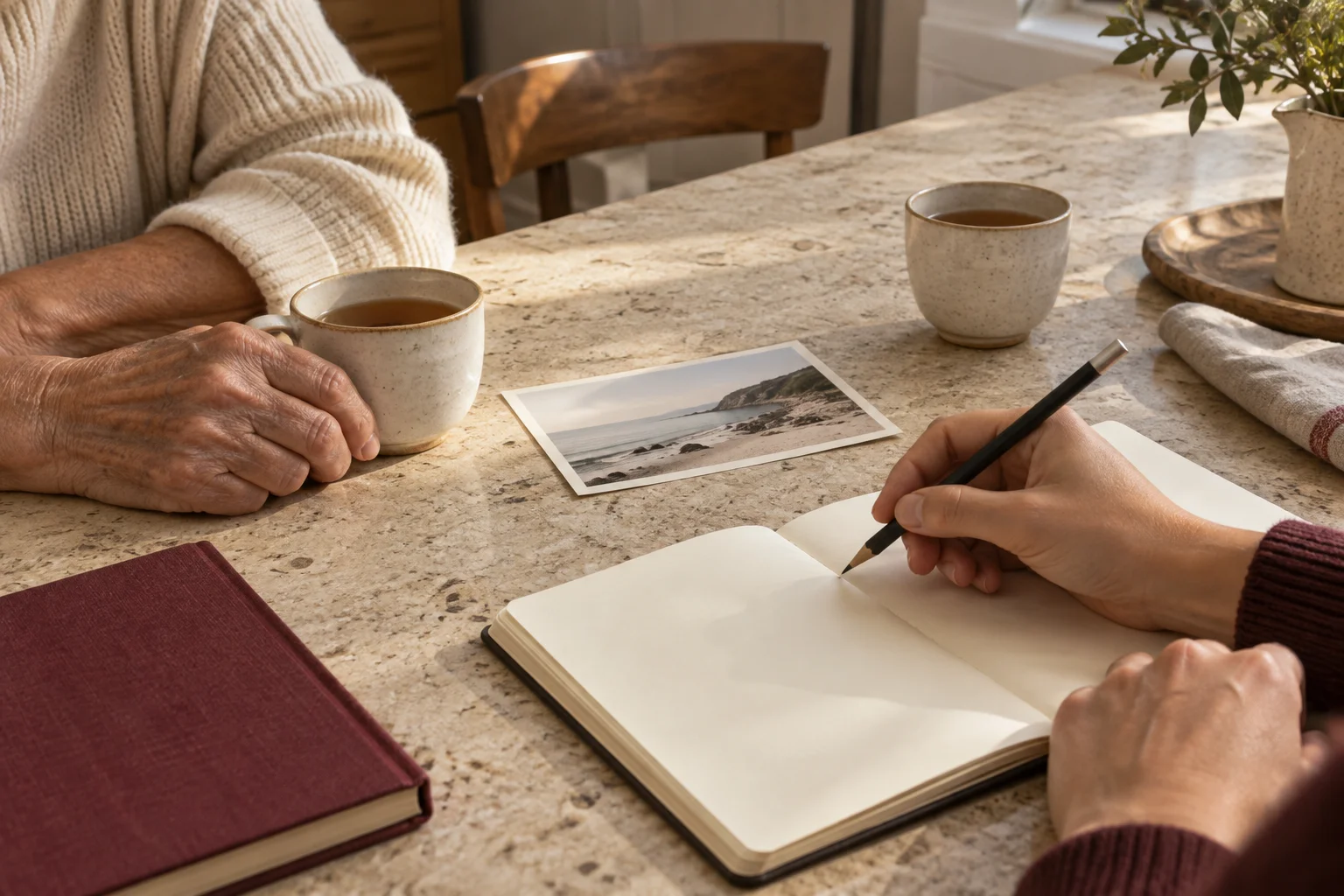
To make a birthday memory page for Mom, begin with one experience you shared. The page should explain what happened and why you still think about it. Choose a scene you can describe without summarizing her whole life: a drive, a meal you prepared together, or a first visit. Fictional example: a mother and son turn their canceled outing into a picnic on the kitchen floor because of rain.
Use four boxes on your planning sheet: where, who was there, what changed the plan, and the detail you remember. This boundary leaves space for a picture and messages. Save other memories for a birthday conversation instead of squeezing every important event onto one page.
- Place and people: …
- Change of plan: …
- Detail I remember: …
- What I want to tell Mom: …
Let the photo add information
Choose a photo that explains the scene or its setting. It does not have to show the exact event, but the caption should identify what it represents. In the fictional example, a kitchen photo taken in another year might say, “The kitchen where we set up our picnic; photographed later.” Do not present it as evidence of the remembered afternoon.
Include names and a date only when you know them. If no picture fits, use text alone or an object photo whose connection you can explain. Ask people pictured about sharing the page. Canva’s PDF help warns that exported files may retain uncropped photo content, so remove sensitive material from the original rather than relying on a visual crop.
Give each voice its own space
One central memory can accommodate two or three short messages without turning into a group biography. Ask relatives for a sentence connected to the scene or one of Mom’s familiar habits. Keep a signature beside each message so the reader knows who is speaking. If a child dictates their words, do not rewrite them as a solemn declaration. If two people remember the food or setting differently, distinguish their memories rather than manufacturing certainty.
In the fictional example, the son tells the picnic story and his sister remembers the mismatched cups. Neither contribution needs to describe their entire relationship with Mom. Participation can remain optional; a person who declines does not need an explanation printed on the page.
Replace a general compliment with a detail
A detail lets you say thank you without assigning Mom a permanent role as the perfect person. Instead of “you are always there for everyone,” describe what she did in the chosen scene. Fictional example: “You spread the picnic blanket in the kitchen so our canceled outing still felt like a celebration.” Read the sentence again: does it describe a gesture the writer remembers, or impose a broad personality claim?
End with a concrete wish, such as making that meal together again. Avoid comparisons among siblings and language that reduces her to the help she provides. Let the headline name the scene. The birthday date can identify the occasion without another paragraph of general praise.
Assemble the page before choosing a format
Your finished worksheet has five parts: headline, story, photo with caption, signed messages, and birthday wish. Read them in that order to find repeated information. The public 22routes guide to preparing photos and stories can help organize your files. The current catalog has no dedicated Mom template. You can create this single page in a simple document without buying a full newspaper.
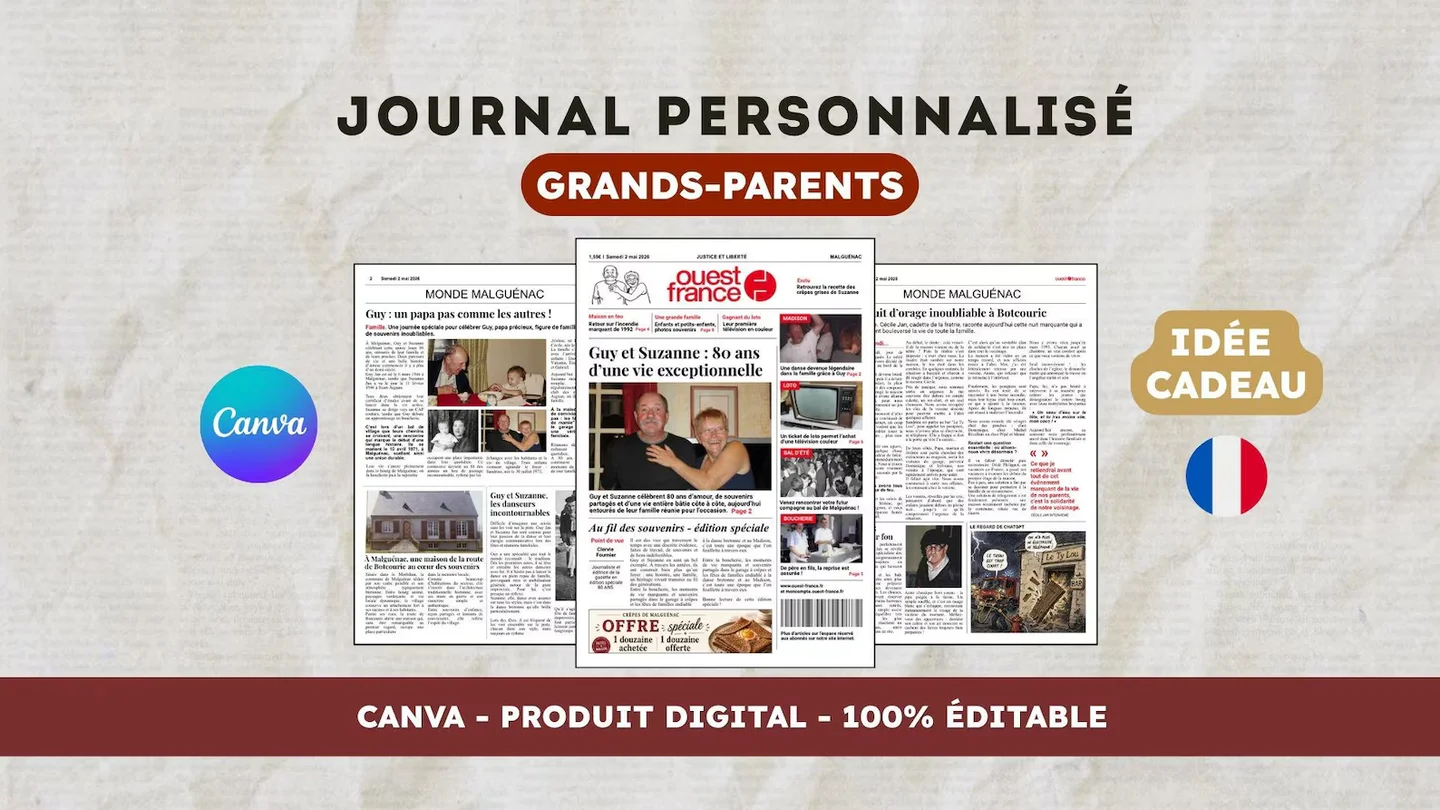
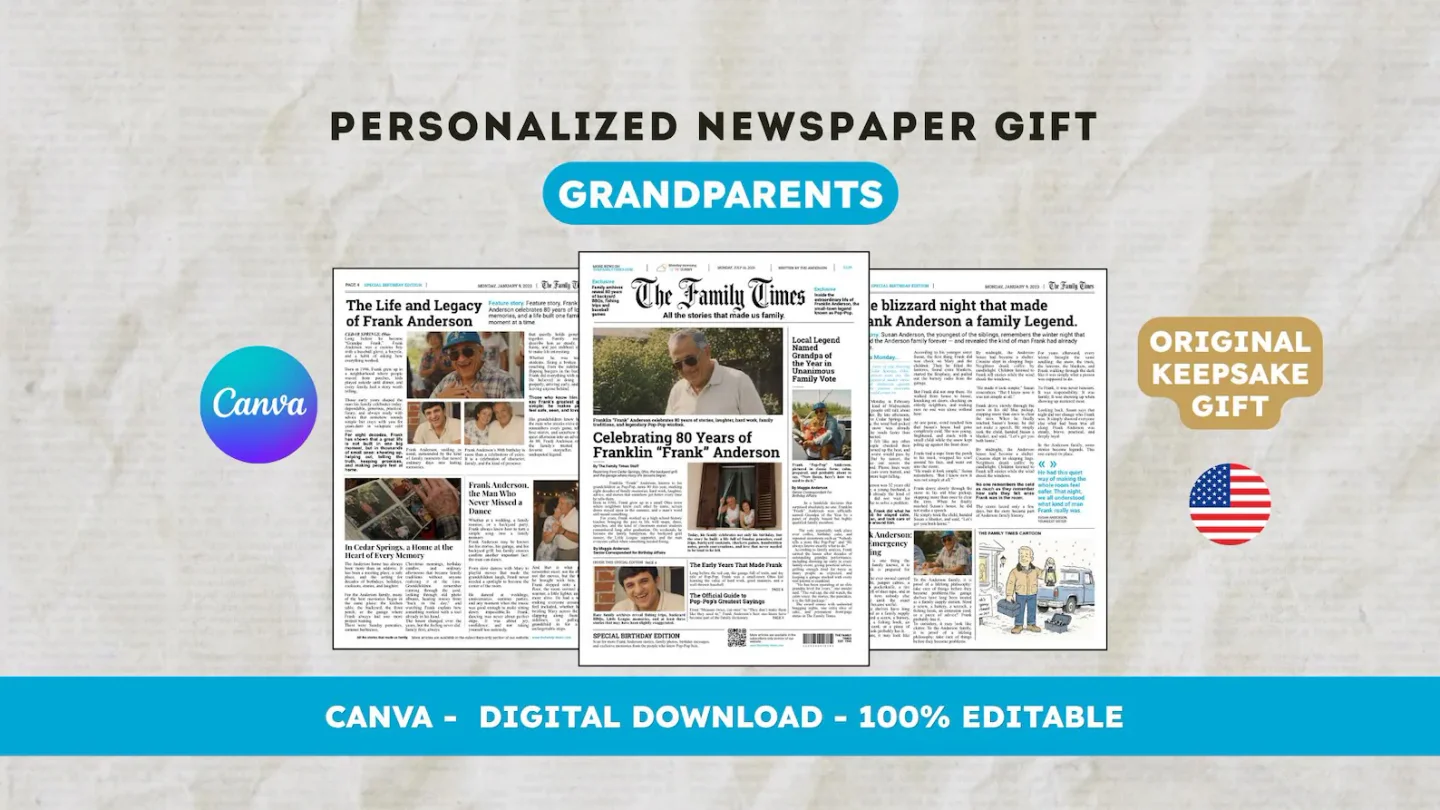
If considering an existing template, inspect its actual previews, language, and labels before deciding whether it fits; do not assume full adaptation is possible. Current 22routes templates are 12-page digital Canva files, with printing and delivery arranged separately. An 80th birthday label should not quietly become a claim that an English Mom design is available.
Frequently asked questions
01What is a meaningful birthday gift for Mom?
A page about a shared memory can be meaningful because it identifies a specific moment in your relationship. Add what stayed with you and a personal message. Choose the format around her preferences without promising a particular emotional reaction.
02Can I make the page without a photo of the memory?
Yes. The story can stand alone. A photo of the setting or an object can also work if the caption explains its connection and date. Do not present an unrelated picture as though it shows the event you describe.
Have another newspaper in mind?
Suggest the title. We’ll email you if a template becomes available.