
Choose a thread both partners recognize
For a wedding anniversary newspaper, choose a story both partners want to tell and give each voice room. The wedding identifies the occasion; the subject can be a home, a habit, or a project they built together. Fictional example: Leah and Sam frame their shared life around their first garden. Their planning sheet says, “What we learned while growing something together.”
It does not attempt to summarize every year or provide wedding-day information for guests. Ask the couple what feels like them today and what should stay private before collecting relatives’ memories. A shared thread helps you choose material, but it should not require the partners to have identical memories or identical feelings about every event.
Use a worksheet with two columns
Ask each partner the same question separately: “What detail comes back when you think about our first garden?” Put one answer under each name instead of immediately merging them. Add a third box for facts they confirm together: setting, approximate period, and people present. In the fictional example, Leah remembers pots that were too small; Sam remembers a neighbor offering advice.
Those angles can appear under separate signatures. If the date is uncertain, give a period rather than settling it arbitrarily. StoryCorps encourages choosing questions that fit relationships; this two-voice worksheet is an original tool, not a reproduction of published participant stories. Read the separate passages back to both partners before constructing a shared introduction.
- Leah’s voice: the pots that were too small.
- Sam’s voice: the neighbor’s advice.
- Shared reference: setting / confirmed period / story approval.
Include everyday milestones
Useful milestones extend beyond the ceremony, children, and major trips. A move, a meal that became a tradition, something learned together, or a recurring visit can explain the couple’s life. For each candidate, ask what it changed, who can tell it, and whether an appropriate picture exists. In the fictional example, the first garden leads to a feature about outdoor meals and a friend’s message about watering the plants.
Leave out details included only to complete a chronology. Do not assume every couple shares the same family milestones. Balance comes from giving both people space and letting them choose their memories. A small ordinary episode can belong beside a major event when its connection to the shared thread is clear.
Have the couple approve the story
An anniversary does not give relatives permission to narrate the couple’s difficulties or conflicts for them. Ask about the story, photographs, and group receiving the edition. If it is a surprise, seek approval for sensitive subjects without revealing every layout detail, or use scenes they already agree to share. Read relatives’ messages for balance: do they cast one partner as responsible for everything, or describe a specific experience?
In the fictional example, a remark about an argument over gardening is removed at Sam’s request. The newspaper retains the pots and neighbor without pretending every year was easy. Approval applies to the actual text, not simply the general idea of making a keepsake about the couple.
Assemble a keepsake without assuming a wedding template
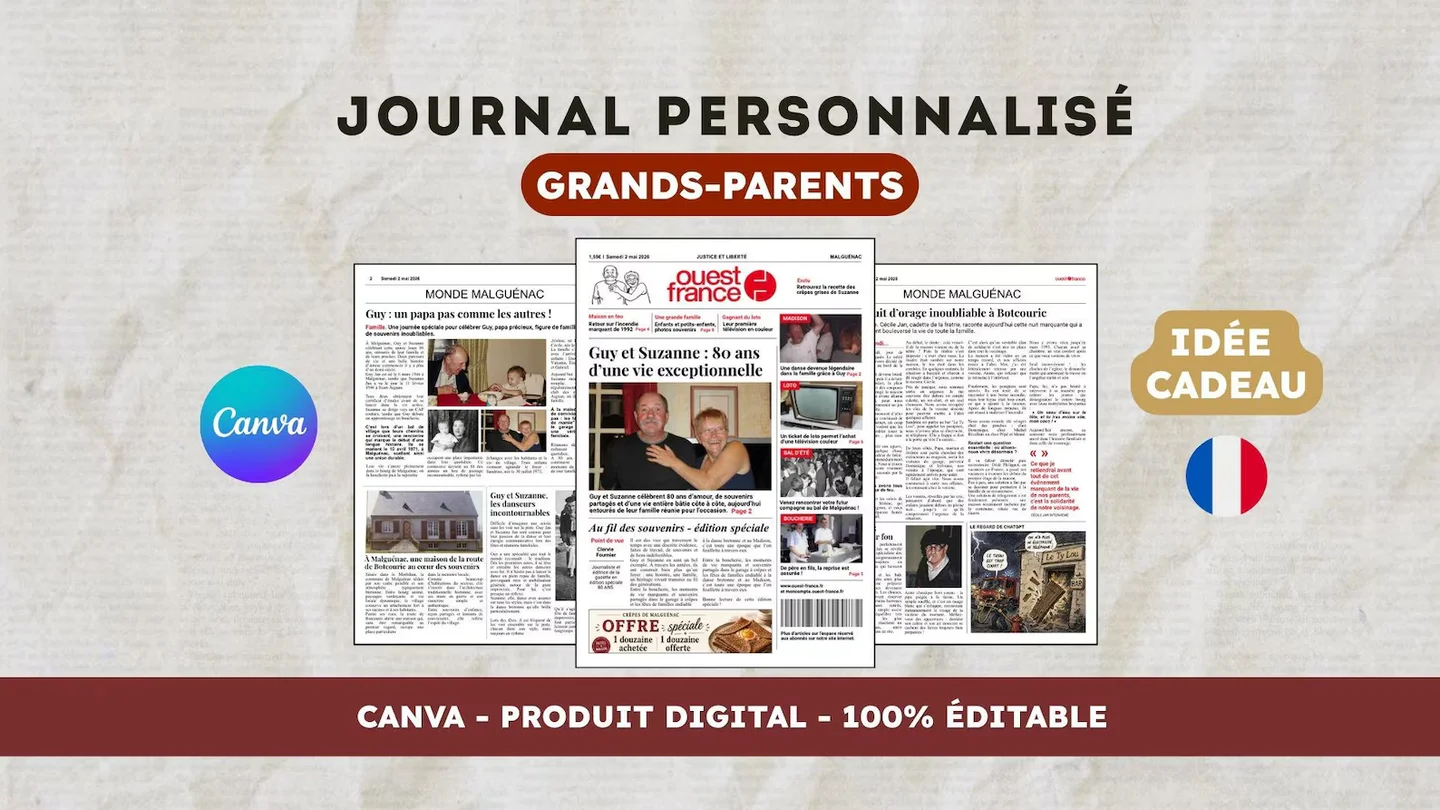
Your plan can contain a jointly approved opening, two signed passages, selected milestones, and approved messages. The public 22routes photo-and-story preparation guide helps organize that material. The current catalog does not offer a dedicated wedding anniversary template. If considering an existing design, inspect its actual language and previews, then decide whether the features truly fit your project.
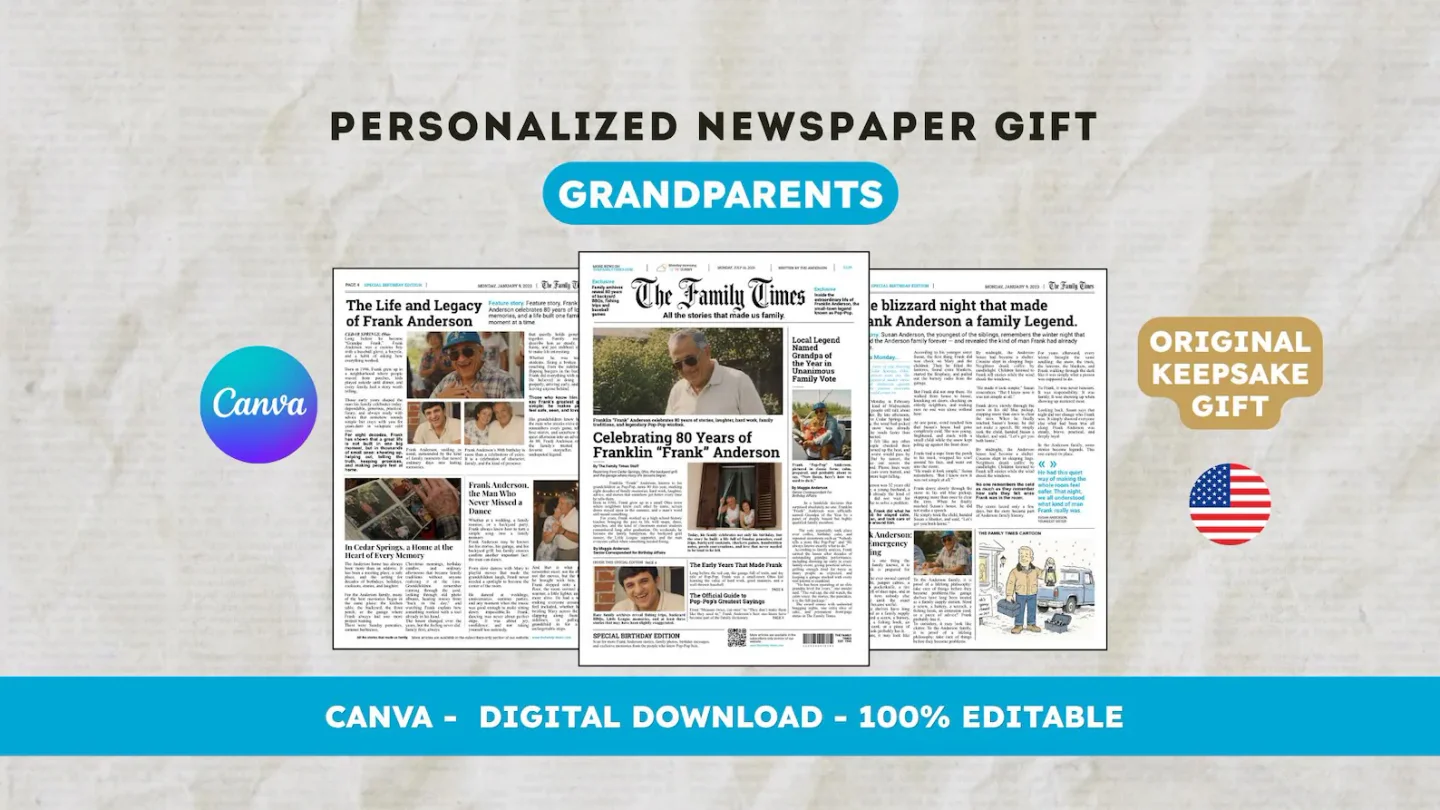
The English design is an 80th birthday newspaper; that label matters when choosing it. Do not assume every element can change. Current 22routes files are 12-page digital templates personalized in Canva, with printing and delivery arranged separately. You can also retain this worksheet and create a simpler format suited to the couple’s story and intended audience.
Frequently asked questions
01What if the partners remember the scene differently?
Keep both accounts under their names and separate confirmed facts from personal memories. A difference does not need resolving to be interesting. Ask each person to review their passage and both partners to approve the complete story.
02Should the newspaper focus on the wedding day?
No. The ceremony can open the story, but the anniversary also concerns the life built afterward. Choose ordinary milestones that matter to both people. Schedules and guest information belong in a wedding-day gazette.
Have another newspaper in mind?
Suggest the title. We’ll email you if a template becomes available.