
What is a workable team setup?
To make a family newspaper together, choose one person to collect contributions and one to edit the layout. Give each relative a small assignment and a reply date. Review one shared version afterward. If everybody changes the final design at once, it becomes harder to know which wording the family approved.
Keep the setup small. One person can cover several roles in a small family. For a larger group, let someone from each branch gather that branch’s contributions. The coordinator’s main job is to make sure people know what to send and that a story does not disappear into a private text thread.
Who collects, writes, edits, and proofreads?
The collector receives replies and follows up on missing details. The writer trims stories while keeping each contributor’s voice. The layout editor places the material in the chosen template. The proofreader checks the complete result, including names in photo captions.
Give every contribution an owner. When two cousins remember the same event, use two short viewpoints or agree on a shared story credited to both. If nobody responds for a planned section, remove it from the plan rather than asking the layout editor to invent something.
A request you can send to relatives
Adapt this request: “We’re making a newspaper for our next family get-together. Could you send five to eight lines about one moment you shared with Grandma or Grandpa by Sunday, plus a photo if you have one? Please include names, the place, and what you are comfortable sharing. We’ll send your piece back for a quick check.”
Offer a phone call to relatives who would rather talk than write. Children can dictate a sentence or describe a drawing. Do not ask them to sound like adults. A short contribution earns its place when it adds a detail nobody else has mentioned.
A tracker that shows what is missing
Use a shared document or a sheet of paper with these columns. Track the material, not the person. “Needs clarification” means a question is waiting; “received” does not mean “proofread.” Set one handoff date for the collector to give the editor a complete set.
- Contribution: working title or subject.
- Owner: who can answer follow-up questions?
- Received: story, photo, caption, signature.
- Check needed: name, date, or sharing permission.
- Status: waiting, received, needs clarification, approved.
Use one version for the final review
Before exporting, give a reading copy to a small group of proofreaders. Ask for a page number, the passage, and a proposed correction. Keep the source document and replies, then check the layout again after edits. Even correcting a name can move a line and change a page.
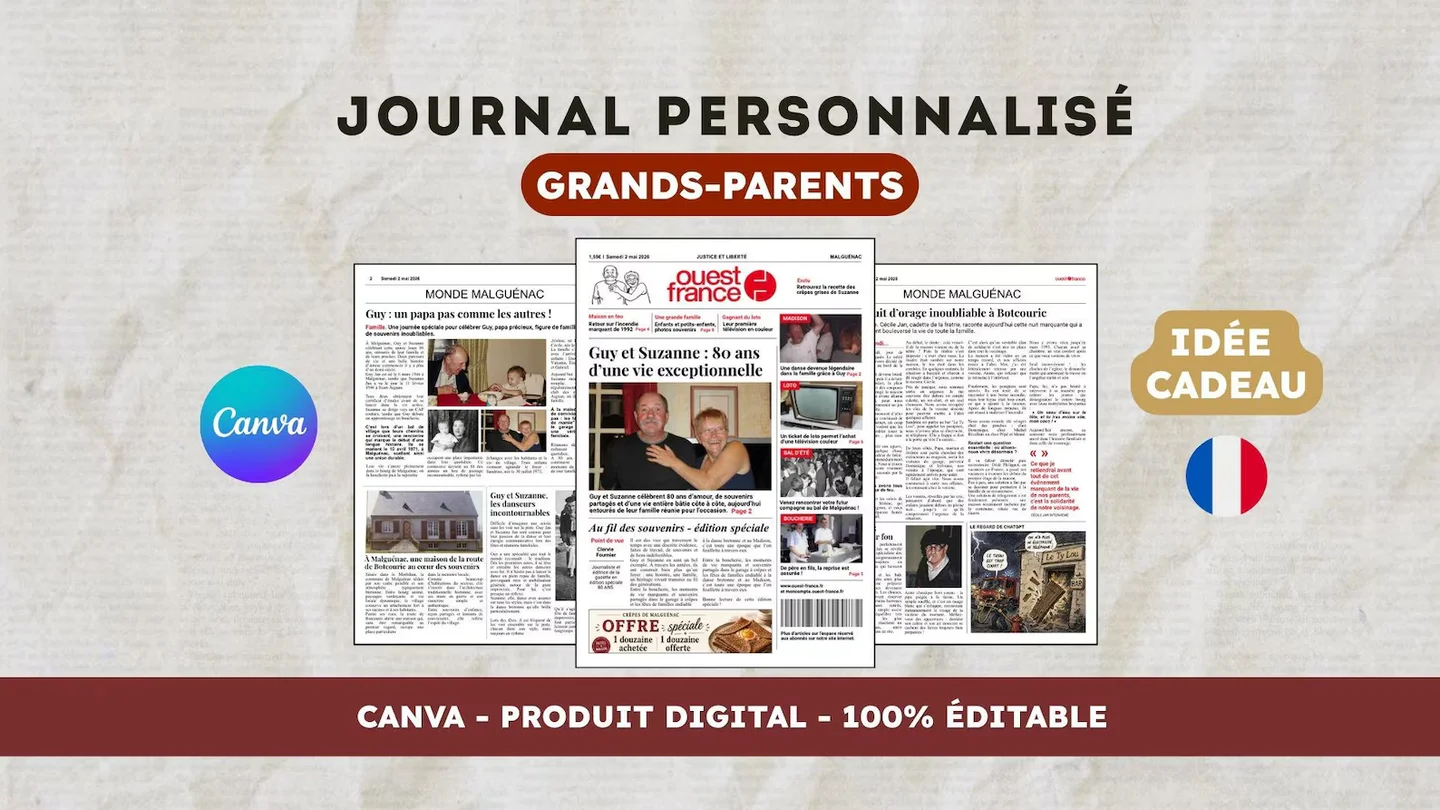
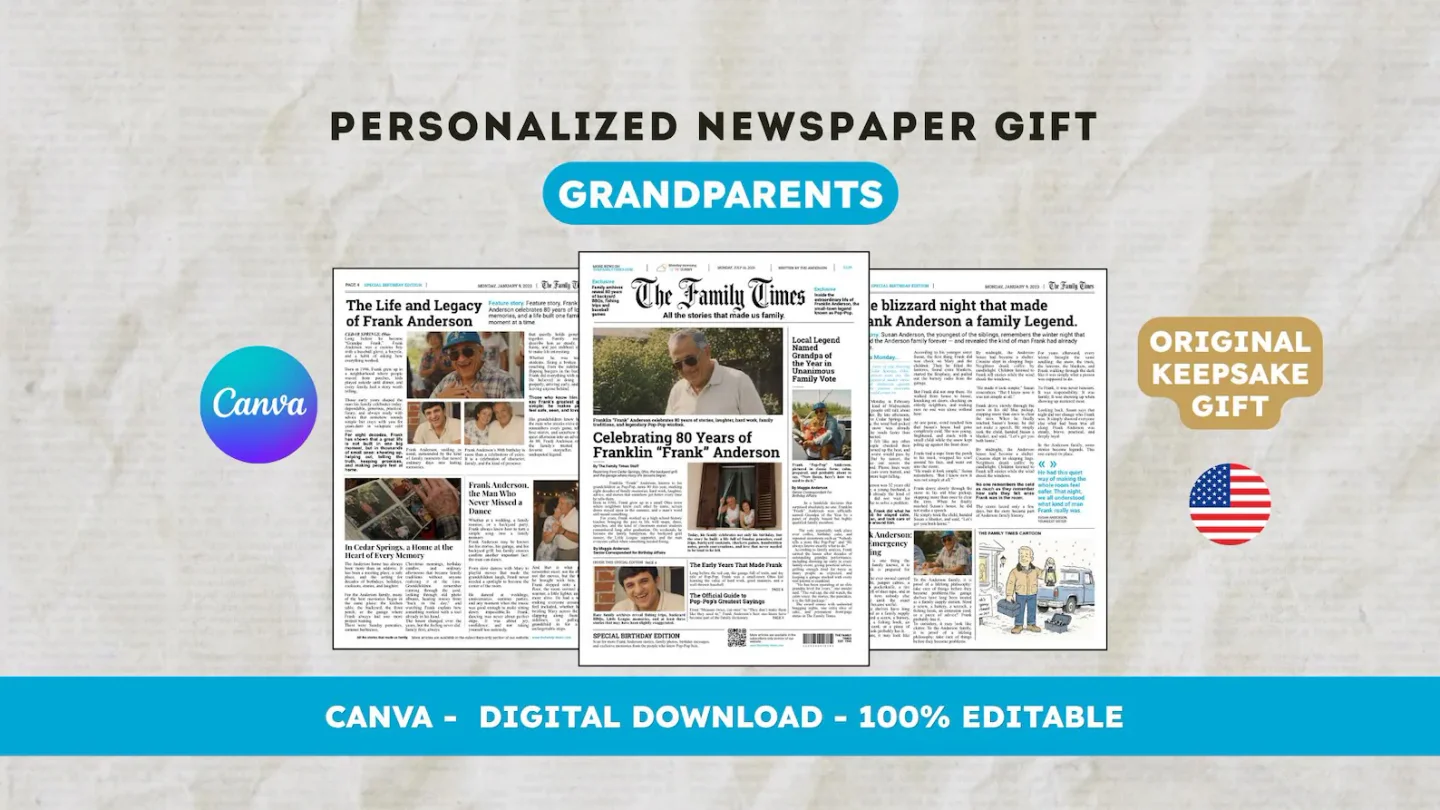
The 22routes grandparents template starts in French. “The 80th birthday newspaper” starts in English with an 80th birthday theme. Choose for your readers and adapt the occasion. These are digital templates; coordinating relatives and arranging printing are your parts of the project.
Frequently asked questions
01How do we avoid repeating the same family story?
Have the collector check for duplicates before layout. Keep two short viewpoints when they add different details, or agree on one shared story credited to both contributors.
02Can a relative contribute without writing?
Yes. Offer a call and take notes, or ask for a photo and the story behind it. A child can dictate a sentence or explain a drawing.
Have another newspaper in mind?
Suggest the title. We’ll email you if a template becomes available.