Check the agreed use of the message
A voice message can provide an anecdote, but sending it does not automatically mean its contents may appear in a newspaper. Ask whether the relative agrees to transcription, adaptation into a story, and sharing with the intended readers. If you record a new conversation, explain the recording before starting. These are editorial steps, not a legal rule that applies in every situation.
Record the speaker’s name, message date, and subject. Ask what should stay out of the newspaper. You do not need to tell everything in the recording. Choose a short scene the person wants to share without bringing along the private conversation around it.
Transcribe useful words without filling gaps
Listen to the selected passage and write down the words before summarizing. Mark uncertainty as “word to check” in private notes rather than guessing a name or date. Return to the audio or ask the speaker. This method does not require a transcription service; you can work manually with a short passage.
Fictional transcript for this exercise: “It was at my aunt’s house, I think on a Sunday. We’d made a pie… well, two pies. Paul put his on the chair. Nobody had seen it. We had to find somewhere else for it before lunch. Everyone was laughing.” The exact date is unknown, so the finished paragraph will not add one.
Choose the scene and remove repetition
The scene is straightforward: a pie left on a chair led to laughter before lunch. The speaker corrects the number of pies. Keep that correction in your notes, then choose wording that does not turn uncertainty into a new certainty. The story does not need an invented punch line.
Remove hesitation from the paraphrased narrative only. If you place words in quotation marks, check them against the recording. Do not join distant snippets as though the person said one continuous sentence. A short passage can retain an exact quote and summarize the rest, provided the reader can tell those two uses apart.
Write an attributed paragraph
Proposed paragraph, still fictional: “Clara remembers a lunch at her aunt’s house. Before the meal, Paul had left his pie on a chair where nobody noticed it. They had to find another place for it. ‘Everyone was laughing,’ Clara recalls.” The passage keeps the scene and attributes the memory; it does not specify an uncertain Sunday or a year absent from the recording.
The quoted sentence stays exact. The other sentences are an editorial paraphrase, not a quotation from Clara. Show her the complete paragraph and any caption. If she says the laughter was awkward rather than cheerful, revise the account instead of keeping the version that sounds nicest in a gift.
- Source: Clara’s message, receipt date recorded.
- Uncertainty: day and year unconfirmed, so omitted.
- Exact quote: “Everyone was laughing.”
- Approval: reply about the complete paragraph before layout.
Approve the version readers will see
Send the text with these questions: “Does this reflect your memory? Would you like anything removed or changed? Are you comfortable sharing this version with these readers?” Keep the reply with the approved passage. A fictional approval for this exercise would be: “Yes, this version works for the invited family.” In your real project, wait for the real reply.
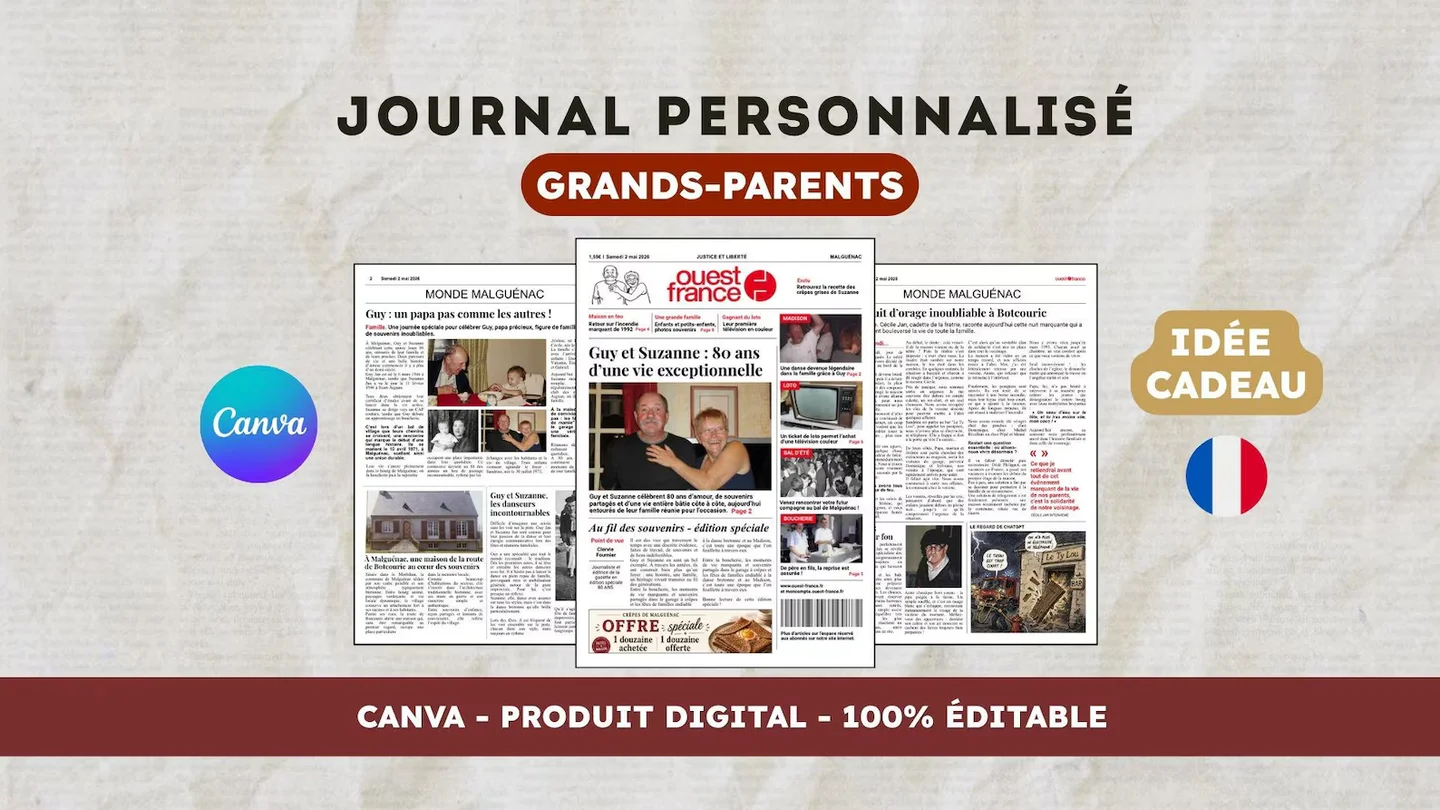
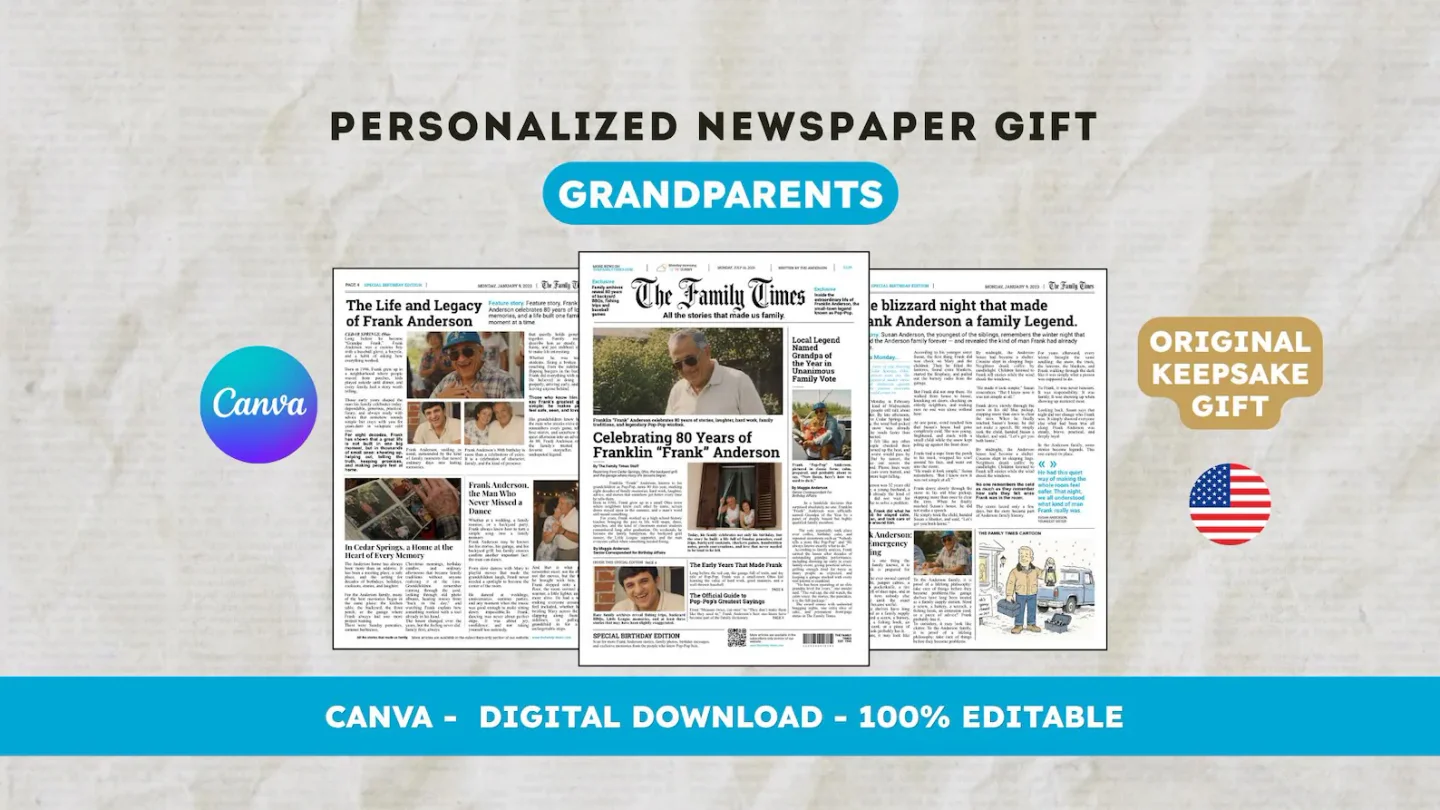
Then review the exported page for cuts or lost attribution during layout. The English-language 22routes template provides 12 digital pages to personalize in Canva, with printing separate. The sources include the template and existing guides; use them once the story’s approval is settled.
Frequently asked questions
01Should I publish the whole transcript?
No. Choose an agreed scene, paraphrase the account, and keep quoted words exact. Store working notes separately.
02What if I cannot understand a name?
Mark it for checking in your notes and ask the speaker. Do not replace uncertain audio with the name that seems most likely.
Have another newspaper in mind?
Suggest the title. We’ll email you if a template becomes available.