
Tell readers why this edition exists
An editor’s letter welcomes readers and explains what the edition is meant to preserve. It doesn’t need to tell an entire life story. Name the occasion, your purpose, and a concrete glimpse of the contents. A letter promising “every story our family has ever told” sets an expectation you cannot meet; “a few memories of our Sundays together” gives the edition a manageable scope.
Write the letter after choosing the sections, so you know what readers will actually find. If contributions are missing, don’t promise an interview or a recipe page that isn’t there. The published 22routes guide to birthday newspaper story ideas, in the resources, can help you select material. The three letters below are fictional editorial examples, rather than accounts from customer families.
Choose a speaker and a reader
Use “we” when the signers can stand behind the statement. “We chose these memories” refers to the people who made the selection. “We all lived through these moments” may exclude younger relatives or people who weren’t there. Try “We gathered the memories people wanted to share,” which says what happened without borrowing everyone’s voice.
Also decide whether you are addressing the recipient or the whole readership. “For you, June” introduces a personal gift; “Welcome to our family edition” invites a wider circle. Don’t switch between them by accident. One editor can sign personally if that person assembled the newspaper. They can thank contributors elsewhere without claiming to represent the entire family or turning the welcome into a list of production responsibilities.
Two letters: welcome and birthday
Warm welcome, fictional example: “Welcome to our little newspaper. We gathered explained photographs, a few kitchen memories, and words each person wanted to keep. Some accounts overlap; others introduce a scene we are discovering here. Browse at your own pace and return to whichever page makes you think of someone. Nora and Malik.” The structure is invitation, contents, a way to read, and a signature.
Birthday edition, fictional example: “June, we wanted to wish you a happy birthday with something that won’t disappear into a phone’s message history. Here are our memories of your table, your walks, and the little sayings we pass along. This newspaper doesn’t tell everything. It gathers what we wanted to give you today. With love, your grandchildren.” Replace each promise with something your actual edition contains.
A letter for shared memories
Shared-memory edition, fictional example: “This edition began with a box of photographs missing several captions. We asked who was there, what was happening, and what each person wanted to tell. Some dates remain uncertain; we chose to say so instead of guessing. These pages keep the words their writers agreed to share. Thank you to everyone who searched, remembered, and read the drafts. Casey, for the newspaper team.”
This letter explains the process without asking readers to investigate it. Use the structure when your newspaper really distinguishes confirmed dates from approximate memories. Don’t borrow it to imply checks that you never performed. One sentence about contributions is enough. Detailed credits can go in a separate small box if the participants want their names included in the edition.
Sign and trim without losing the purpose
Check the verbs: gathering, choosing, and proofreading describe different contributions. Ask the named people to approve a collective signature. “The family” may look convenient, but it can hide people who didn’t participate. “The cousins who prepared this edition” is clearer about who is speaking and avoids claiming agreement from absent relatives.
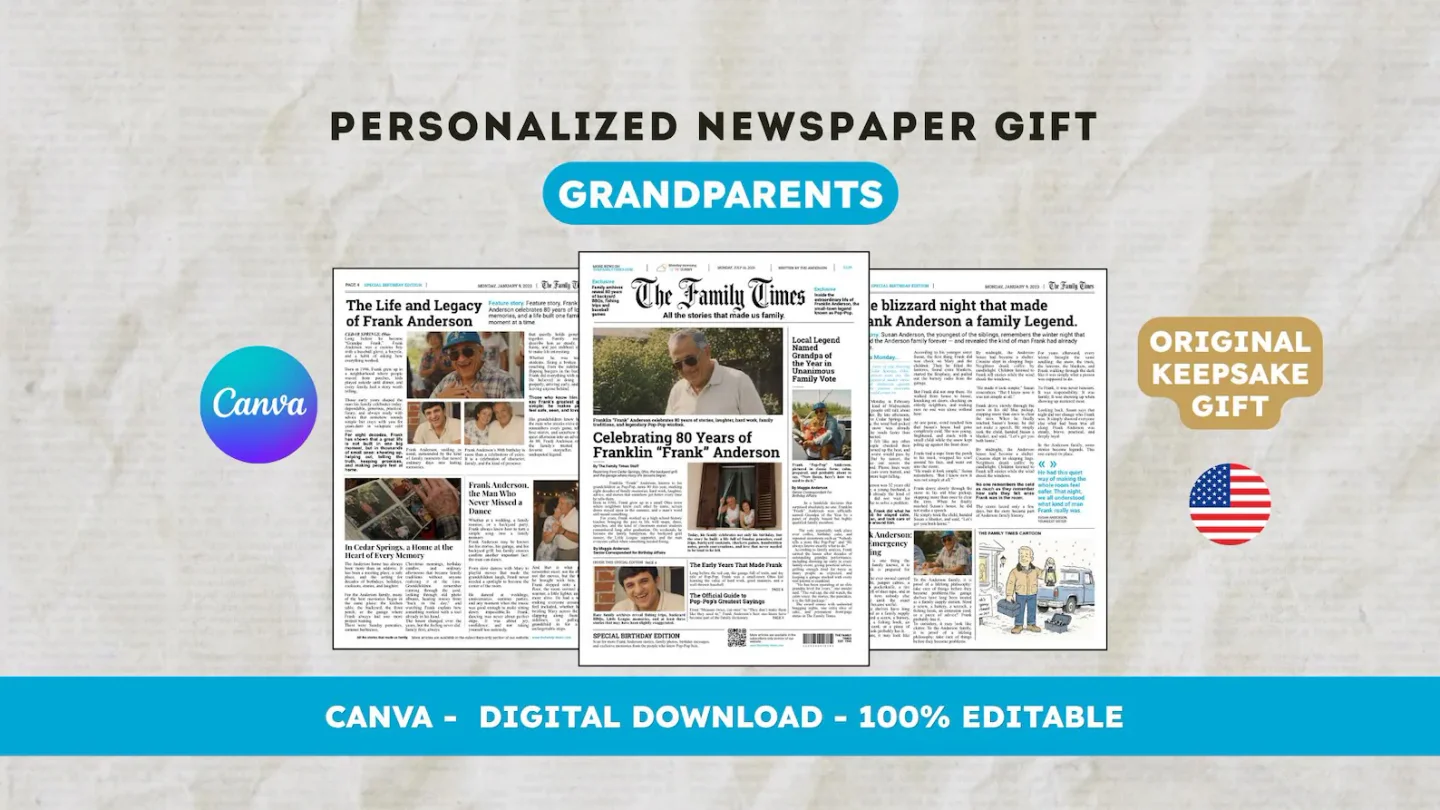
In the layout, cut repeated thanks and vague announcements first. Preserve the purpose, one glimpse of the contents, and the signature. To try the letter on a page, see the English-language 22routes 80th birthday newspaper in the resources: a digital 12-page Canva template, with printing arranged separately. Replace its age and occasion references if needed. Put the welcome where it helps readers enter the edition, leaving full memories to their own stories.
Frequently asked questions
01Must the editor’s letter address the recipient directly?
No. You can welcome every reader or speak to the person being celebrated. Choose one main audience and keep it consistent, rather than switching between the recipient and the group without a reason.
02Where should contributor thanks go?
One sentence in the welcome may be enough. Move a long list to a separate credits area. Confirm each person’s name, contribution, and permission before including them.
Have another newspaper in mind?
Suggest the title. We’ll email you if a template becomes available.