Choose an activity and one thing to keep
For a fall visit with grandparents, pick an activity everyone wants to do, then keep one specific record: a captioned photo, a remembered phrase or a recipe note. You do not need a big outing. An album opened at the kitchen table can provide as much story material as a walk through the neighborhood.
These seven ideas are options, not a ranking. Choose by interests, available materials and the energy people have that day. Ask grandparents what they would enjoy and children what they would like to find out. Keep a seated or shorter version available so a change of plans does not turn the visit into a disappointment. This is a fall visit plan, not a school-break schedule.
7 activities that produce different kinds of memories
Choose one thing to keep from each activity. That stops the visit from becoming a photo assignment or a stack of worksheets. An adult can take a few notes while everyone enjoys the activity. Nobody has to pose for pictures, answer interview questions or finish a page. Use a drawing when a camera would interrupt the moment.
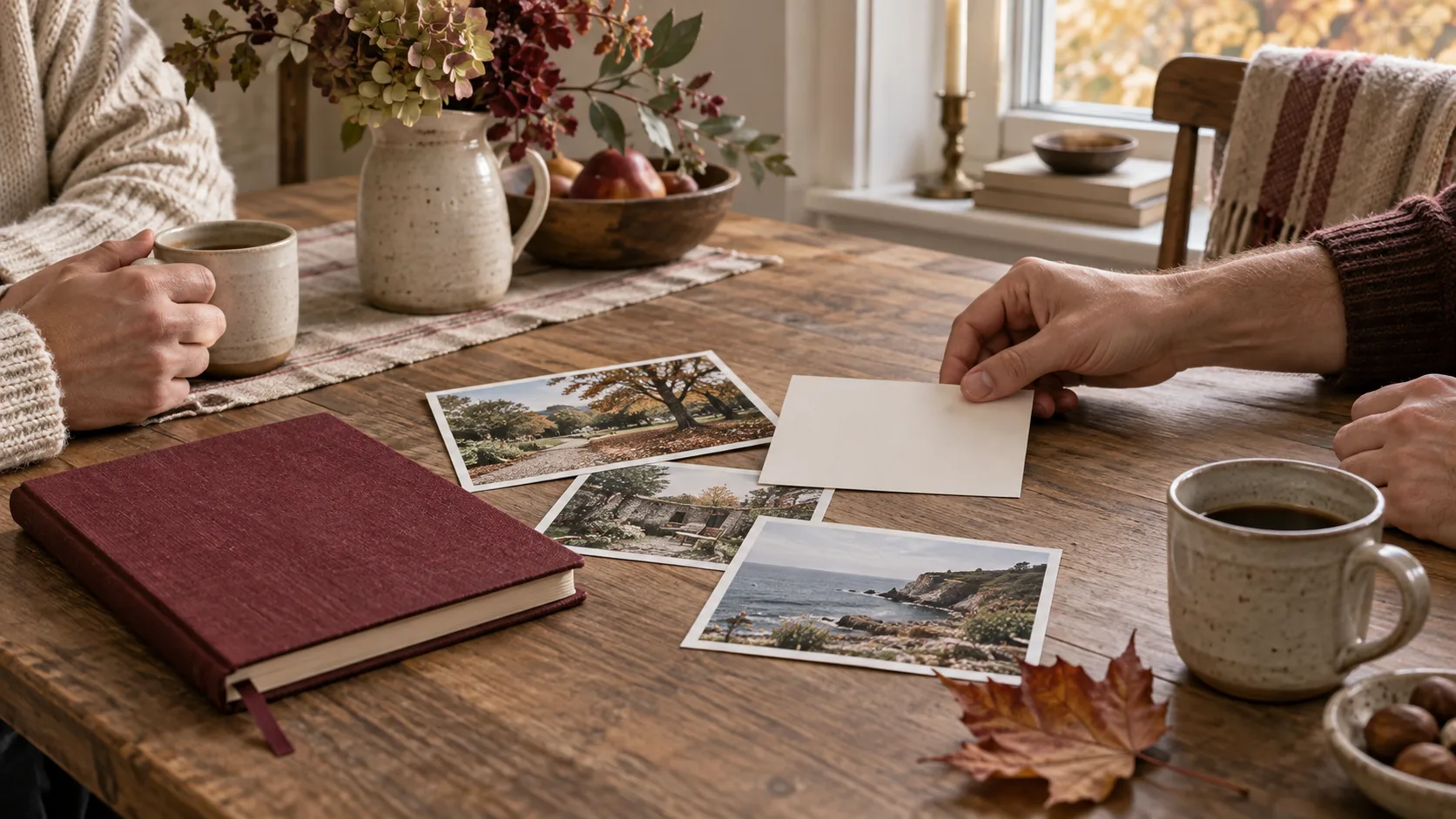
- Open a photo album: choose three pictures and ask what happened just before each one. This works when the family already has prints; uncertain memory is the main limit. Write “date to confirm” instead of filling in a guess. Keep one caption approved by the person who tells the story.
- Talk through a familiar recipe: ask who used to make it and what makes the household version different. An adult chooses suitable tasks and equipment. If cooking would complicate the visit, describe the steps at the table instead. Keep the recipe’s origin and a quote; do not invent a missing measurement.
- Notice fall outside: find a color, a sound and one detail each person spots. A short outing chosen together is enough. Weather or access may make a window or porch a better option. Keep a landscape photo and an observation. Avoid turning a guessed plant identification into an established fact.
- Draw a family object: a cup, a box or a tool chosen by its owner provides a concrete subject. This can happen seated and without a camera. Do not handle something fragile just to improve the picture. Keep the drawing and an explanation of how the object was used, however simple the sketch.
- Ask about a fall day from years ago: “What did you do after school at this time of year?” invites a scene rather than a full life story. Let the person decline or change the subject. A short answer is enough. With permission, keep their exact words and distinguish memory from independently checked facts.
- Make a postcard from the visit: draw the kitchen table, the walk or the snack, then write a sentence for the grandparents. This works when you want a finished keepsake before leaving. Space is limited, so pick one scene instead of a list of compliments. Photograph the card before giving it away.
- Write the day’s front page: choose one of the activities above, a headline and a caption. This suits people who enjoy writing or arranging a page, but it takes some work after the visit. Keep it as a single page rather than stretching one afternoon into twelve pages of repeated material.
Choose with the materials you already have
Check what you have before buying supplies: ordinary paper, pencils, an album its owner is willing to share and a phone if you want a photograph. You do not need every item for every activity. A visit without a phone can become a written account afterward, checked with the people involved before you save it.
Age can help you choose a way to participate, but it does not define a universal ability. One child may dictate a sentence or draw; another may prefer to write independently. An adult organizes any outing or cooking and remains responsible for equipment choices. Actual interests and needs matter more than an age label.
| You have | Option | Record to keep |
|---|---|---|
| An album | Discuss three photos | One confirmed caption |
| Paper and pencils | Draw an object | Drawing and its story |
| A familiar recipe | Discuss its origin | A quote and steps |
The reporter sheet: a fully fictional example
Here is a fictional sheet to show the result: activity, drawing a mug; observation, “the handle has a thin blue line”; caption, “The mug chosen during our fall visit”; story collected, “We used it for Sunday breakfasts”; object photographed, the mug alone. These details do not describe a customer or a real family visit.
Copy four fields onto paper: observation, caption, story and object photographed or drawn. Add “to confirm” for an uncertain name or date. If a memory concerns someone else, ask whether the sentence can go into the newspaper. A caption can describe the object without identifying a child or revealing a home address.
Turn the record into one newspaper page
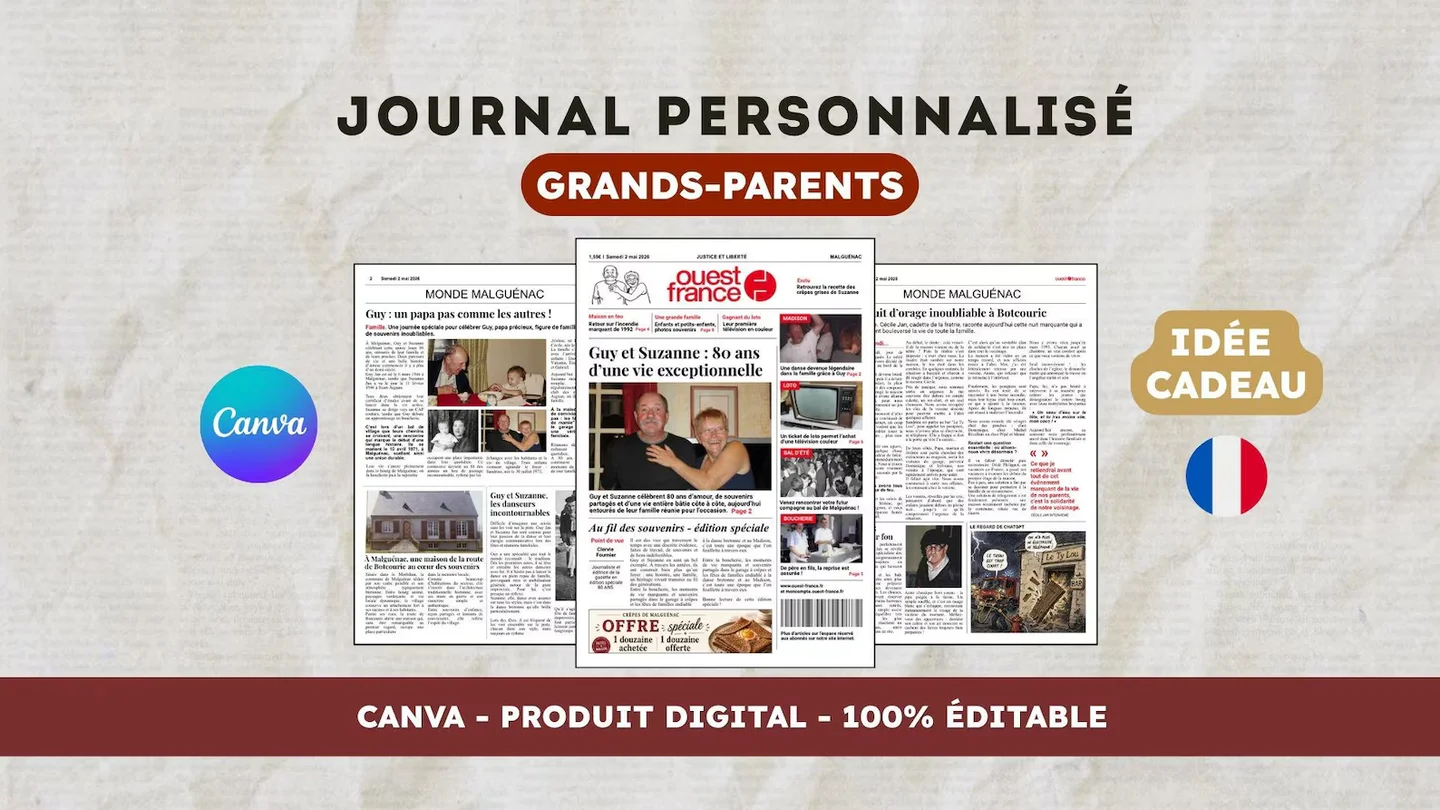
Start with the reporter sheet, then choose a format. A handwritten postcard is enough for one visit. For a longer newspaper combining several memories, 22routes digital templates have twelve editable Canva pages. The English option is an 80th birthday design, not a ready-made fall activity kit. Replace the birthday and age references, date and sample text to match the visit.
The template supplies a layout; you bring the stories and photographs. The English purchase includes access and instruction PDFs, not printed copies. Printing and shipping are separate decisions. If you only use one page, check the printer’s requirements instead of sending an incomplete document that was designed for a different format.
Frequently asked questions
01What can you do in fall for kids?
Try a fall observation walk, an object drawing or a postcard from a grandparent visit. Let children choose how to contribute: a picture, a dictated sentence or a question. Keep one record rather than assigning every activity.
02Do we have to print the keepsake?
No. A handwritten card, reporter sheet or PDF sent to selected family members can be enough. If you use Canva, check the exported file and sharing permissions before sending a link.
Have another newspaper in mind?
Suggest the title. We’ll email you if a template becomes available.